
27 Oct Influencer Marketing Strategy For Apps
Summary
Influencer marketing is an impactful advertising strategy across industries, and in today’s digital age, mobile app companies are increasing their budgets on creator marketing as influencers meet users right where they are – on their phones. Partnering with experienced influencers allows brands to leverage genuine testimonies, storytelling, and educational content to inform and connect with their target audiences. Moreover, mobile apps serve diverse audiences and niches, making the opportunities for creator collaborations practically endless. Top apps like Duolingo and Whatnot are embracing influencer marketing for evergreen and seasonal campaigns to increase downloads and boost engagement with users, seeing massive returns and even sustained followings across socials. In this blog, we explore key statistics, strategies, and case studies shaping influencer marketing for mobile apps.
2025 Mobile App Industry Statistics
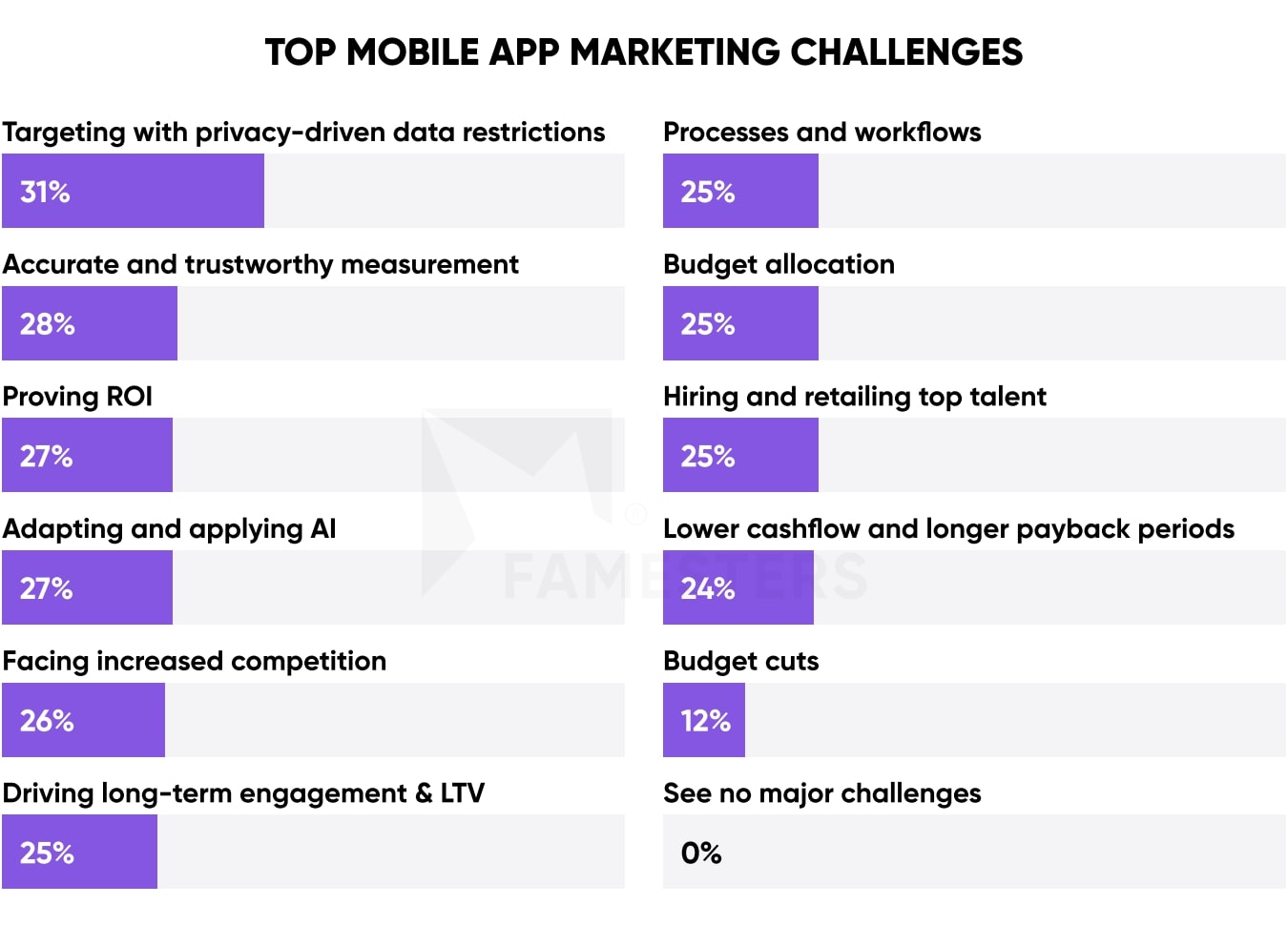
Top Mobile App Marketing Challenges faced by brands in 2025.
- According to Business of Apps, 137.8B apps and games were downloaded in 2024 alone. 46.9B of those downloads were for gaming platforms while 91.3B were for apps.
- Famester’s Mobile App Industry and Influencer Marketing Report revealed several key marketing challenges for brands, including targeting with privacy-driven data restrictions (31%) and driving long-term engagement (25%).
- Famester also reported that 83.8% of mobile app brands believe that customers acquired through influencer marketing are of higher quality in comparison to those from other marketing methods or strategies.
- According to data from iSmash, TikTok, Instagram, and Facebook are the most-downloaded apps of 2025, respectively, all of which are dominated by influencer content.
Key U.S. Influencer Marketing Statistics
- According to CreatorIQ’s State of Creator Marketing Report, average reported annual influencer marketing budgets have grown 171% since last year.
- Sprout’s Q3 2025 Pulse Survey revealed that 64% of consumers are more willing to purchase a product from a brand when they partner with their favorite influencers. Moreover, Sprout data also revealed than 9 in 10 marketers report that sponsored influencer content outperforms brand content in terms of engagement and 83% of marketers share that influencer brand partnerships convert better.
- Dogtown Media reports that 64% of consumers find genuine reviews from influencers to be the most effective content, and more than 55% of consumers are most motivated by special codes or discounts from influencer marketing content.
Why Influencer Marketing Works For Mobile App Brands
Cost-Effective User Acquisition
One of the key benefits of influencer marketing, particularly for mobile apps, is cost-effective user acquisition. According to Famester, clicks from influencer marketing content carry between 50 and 70% lower CPIs and higher retention than other paid social ads. Moreover, mobile app marketers claim that influencers deliver a 23-37% higher customer retention rate, as per Famester data, further proving their massive impact while being cost-effective for brand marketers.
Higher-Quality and More Loyal Users
As outlined in our list of 2025 Mobile App Industry Statistics, 83.8% of mobile app marketers report that customers acquired through influencer marketing are of higher quality than those acquired elsewhere. Audiences deeply trust influencers for their authenticity and how well they naturally integrate branded content into their channels, resulting in higher engagement. If a fan genuinely values the opinion of their favorite influencers and is open to trying their recommendations, a mobile app influencer marketing campaign may result in increased brand awareness and higher-quality downloads, especially if the influencer consistently showcases their passion for the brand.
Scalable Word-of-Mouth Growth
Influencer marketing is an amazing tool for amplifying organic discovery across social channels, boosting authentic exposure and downloads. The Double Viral Loop, coined by Greylock Partners’ Josh Elman, amplifies the impact of influencer marketing for mobile apps. With the Double Viral Loop model, users discover and engage with an app through influencer marketing, invite friends to try the app by sharing the branded content, and are ultimately re-engaged with the platform through this cycle of sharing. Creating shareable influencer content can be extremely effective for mobile app marketing, given that it blends social proof with network effects. Influencer marketing for mobile apps is especially effective during app launches, feature rollouts, and seasonal campaigns, where early engagement or traction is critical for positive results on app charts.

Visual model of the Double Viral Loop for mobile app marketing.
Data-Driven Optimization
At the heart of every successful influencer marketing campaign is data-driven optimization. Beyond setting traditional KPIs for your influencer marketing campaign, utilizing tools like traceable links, discount codes, and affiliate programs makes it easier to measure downloads, retention, and brand engagement. Analyzing such data is essential for refining campaigns and building stronger influencer partnerships over time. Partnering with a leading, data-driven influencer marketing agency such as The Influencer Marketing Factory can be a great strategy for your next mobile app marketing campaign.
Stronger ROI Than Traditional Ads
Another major benefit of influencer marketing for mobile apps is its stronger ROI in comparison to traditional ads or other social media efforts. Over 60% of marketers have supported this claim that influencer marketing yields a better ROI than traditional ads, as reported by Dogtown Media. Data from a Tomoson survey also revealed that businesses earn an astounding return of $6.50 for every $1 spent on influencer marketing campaigns. Tomoson also reports that the top 13% of businesses are achieving an ROI of $20 or more with creator marketing, and “with 70% of businesses earning $2 or more for each dollar invested, it’s evident that influencer marketing represents a highly profitable avenue for driving business growth.”
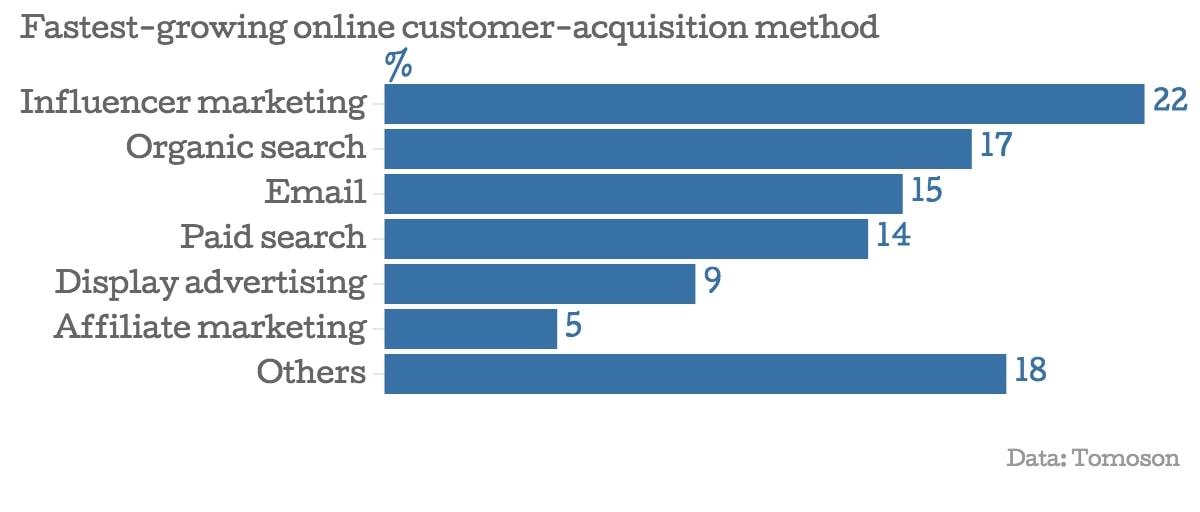
According to Tomoson, influencer marketing is the fastest-growing method for customer acquisition online.
Influencer Marketing Across App Industries
Gaming Apps
Gaming apps are among the most common apps that leverage influencer marketing, especially across mobile platforms like Instagram and TikTok. According to Famester, gaming apps (35%) spend the most on influencer marketing initiatives compared to other platforms. With influencer marketing, mobile gaming platforms can showcase exciting gameplay, essential features, and in-game experiences that engage users. Here’s how gaming apps can effectively leverage influencer marketing:
- Platform Focus: TikTok, Instagram, YouTube, Twitch
- Influencer Niches: Gaming influencers, streamers, entertainment creators, lifestyle creators, creators who align with the aesthetic of the game (i.e., cozy/aspirational creators for a low-stimulation game)
- Key Influencer Marketing Strategies: Sponsored livestreams, mobile gaming tournaments, early-access partnerships to promote game launches, special promo codes for fans to unlock special features in-game, fun giveaways and bonuses to incentivise downloads
E-Commerce Apps
E-commerce and retail apps are increasingly relying on influencer marketing to drive user trust and purchasing behaviors. Influencers are essential for humanizing e-commerce apps and the overall shopping experience, showcasing how users can style, shop, and explore savings in-app. Here’s how e-commerce apps can effectively leverage influencer marketing:
- Platform Focus: TikTok, Instagram, YouTube
- Influencer Niches: Fashion, lifestyle, beauty, parenthood, home improvement
- Key Influencer Marketing Strategies: Shop-with-me content, GRWM or OOTD videos with a seasonal spin, raffles or giveaways that require app installs or account sign-ups, styling challenges (fashion or home decor), influencer lookbooks, co-branded events
Finance Apps
Finance apps can be an element of someone’s daily routine, and influencer marketing is an effective channel to reach these users during their daily scroll. Moreover, creators are increasingly becoming influencer investors in top brands, making them strategic partners for promoting finance platforms. Finance influencers are, of course, the top experts in this field, but here are some diverse strategies for finance app influencer marketing:
- Platform Focus: TikTok, Instagram, YouTube, LinkedIn
- Influencer Niches: Finance educators, investors, personal finance, lifestyle, education, entrepreneurs/business owners
- Key Influencer Marketing Strategies: Entertaining skits demonstrating real-life financial situations and how the app is a solution for them, educational app walk-throughs and tutorials, do’s and don’ts of personal finance, insightful LinkedIn infographic on finance
Food and Beverage Apps
Food delivery apps and restaurant ordering platforms are some of the most frequently used apps besides your typical social or gaming platform. Food and beverage brands, big and small, utilize mobile apps for order fulfillment, promoting limited-time offers, and other essential business functions. The best part is that food and beverage apps appeal to the masses, meaning that almost any content creator can promote your mobile app, considering audience fit and campaign goals. Here’s how food and beverage apps can effectively leverage influencer marketing:
- Platform Focus: TikTok, Instagram, YouTube
- Influencer Niches: Lifestyle creators, food bloggers/reviewers, location-based influencers (i.e., a creator that reviews New York businesses), gamers, fitness creators and athletes, any particular creator with audience demographics that align with your app’s target market
- Key Influencer Marketing Strategies: Social media takeovers, food reviews and first impressions, discount codes and special referral links tied to app installs, cooking challenges, blind taste test challenges, meal planning content, day-in-the-life vlogs
Mobile App Influencer Marketing Case Studies
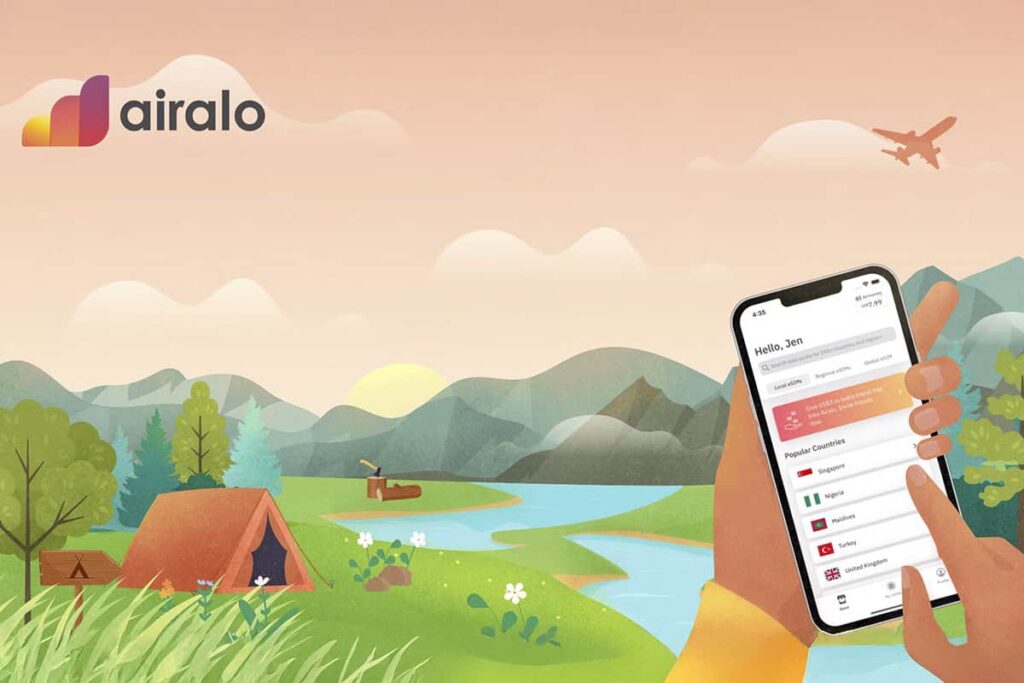
Our Airalo Influencer Marketing Campaign
Airalo
- The Background: Our agency partnered with Airalo to launch an influencer marketing campaign designed to boost awareness and drive app downloads across Brazil and the wider LATAM region. The initiative introduced Airalo’s eSIM technology as a simple, cost-effective solution for frequent travelers, positioning the brand as a must-have tool for staying connected abroad.
- The Solution: To activate the campaign, The Influencer Marketing Factory collaborated with more than 250 creators over a three-month period, tailoring content around three key traveler personas. Through engaging posts on TikTok, YouTube, and Instagram, influencers delivered authentic storytelling with strong calls to action, creating a viral effect across platforms. The campaign successfully generated thousands of organic app installs and first-time sign-ups, establishing Airalo as a go-to choice for seamless global connectivity.
- By the Numbers
- 193K Shares and Saves
- 42.8M+ Combined Views
- 266 Influencers
Check out our full Airalo Case Study.
JOW
Our JOW influencer marketing campaign
-
The Background: Over the last 2 years, The Influencer Marketing Factory has partnered with JOW, an established Grocery Delivery app based in France, to penetrate the US market. JOW offers a solution that enables users to create a grocery list tailored to their chosen recipes. Customers can then pick up their groceries at the partner stores in their state. The campaign is only available in specific US states.
- The Solution: The Influencer Marketing Factory activated over 100 micro and medium influencers who are based in Texas and have audiences located there, aligning with the target demographic. Our team hand-selected partners, including nutritionists, dietitians, active moms, and fitness influencers for this campaign. The content was crafted not only to drive organic engagement but also to feature strong CTAs, making it suitable for paid media amplification.
- By the Numbers
- 12% Engagement Rate
- 5.2M Combined Views
- 100 Influencers
Check out our full JOW Case Study.
MPL Gaming

Our influencer marketing campaign for MPL Gaming
- The Background: The Influencer Marketing Factory partnered with MPL Gaming to launch an influencer campaign aimed at driving brand awareness and app installs across the U.S. market. As one of the world’s leading mobile gaming platforms, MPL offers users the opportunity to play multiple games within a single app, combining convenience, variety, and community. The campaign sought to position MPL as the ultimate destination for casual gamers looking to compete, have fun, and win rewards, all in one place.
- The Solution: To bring this vision to life, The Influencer Marketing Factory collaborated with 23 U.S.-based creators across gaming, tech, and lifestyle verticals, reaching a combined audience of over 98M followers. Each creator produced engaging YouTube integrations that highlighted the app’s unique features and ease of use, demonstrating how MPL allows players to enjoy their favorite games seamlessly within one platform. Through authentic storytelling and engaging gameplay content, the campaign generated more than 15M views, sparking conversation and driving a surge in new app installs.
- By the Numbers
- 98.2M Combined Followers
- 14.8M Combined Views
- 726K Combined Likes
Check out our full MPL Gaming Case Study.
Do’s & Don’ts
Not sure where to start with mobile app influencer marketing?
Here are some of our Top 5 Do’s and Don’ts of Mobile App Influencer Marketing.
|
Mobile App Influencer Marketing Do’s ✅ |
Mobile App Influencer Marketing Don’ts 🚫 |
| 1. Choose the right platforms for your campaign 📱: Consider the age demographics of your app campaign and which social platforms they prefer most or frequently use to engage with influencer content. Platform engagement rates are also crucial to consider. Check out our comparison of TikTok vs. Instagram engagement rates here. | 1. Avoid creator partnerships that don’t align with your audience 💔: Some brands are more flexible than others, but it is still important to selectively partner with creators to ensure proper alignment of values, audiences, and content quality. Partnering with misaligned creators not only hurts your mobile app’s brand identity but also breaks the thoughtfully fostered trust between influencers and their fans. |
| 2. Do leverage storytelling to humanize your brand 💬: By leveraging storytelling, creators can effectively humanize your brand and show real-life applications while aligning with their audience’s interests. Moreover, storytelling can spark dialogue via comments, boosting engagement with your campaign. Learn more about how your brand can effectively leverage storytelling here. | 2. Don’t overload influencers with too many talking points or salesy messaging 🤐: Providing a lengthy list of key talking points defeats the purpose of an “authentic” influencer marketing campaign–these come off as salesy and unnatural to users. Rather, be open to co-creation with influencers and welcome discussion calls to overview the true key messages you want to convey in the content. |
| 3.Partner with micro and mid-sized influencers 👌:Micro influencers and mid-sized creators can be cost-efficient assets for your next influencer marketing campaigns. Although these creators have smaller followings, they often have higher engagement rates and more niche audiences, making targeting even easier. | 3. Don’t forget to discuss performance with creators following campaigns ⚡️: Creators also value data-driven feedback about their campaign performance, which they can leverage in future partnerships and a continued relationship with your mobile brand. Let creators know strengths and opportunities based on KPIs set for your influencer marketing campaign. |
| 4. Remember to track and measure campaign results 📈: Use custom links, promo codes, or affiliate tracking to measure installs, engagement, and retention. Partnering with a data-driven agency like The Influencer Marketing Factory can streamline the data collection and analysis process. | 4. Don’t forget to disclose sponsored content or follow FTC guidelines ✅: Influencers must clearly label sponsored content (#ad, #sponsored) to comply with FTC guidelines and maintain audience trust. Many up-and-coming mobile app brands are having creators create separate “branded” social channels to share promotional content, but such creators should still include a clear disclaimer in each post. |
| 5. Build long-term partnerships with influencers 💕: Circling back to storytelling, establishing a long-term partnership with a creator allows them to naturally integrate your brand into their channels over time. This way, audiences are repeatedly exposed to and familiarized with your mobile app, making them more open to downloading and utilizing it. | 5. Don’t treat influencer marketing like a one-off strategy 🤝: Influencer marketing partnerships are the most effective when integrated into broader marketing ecosystems, as well as creators’ content series. Successful brands grow with their creators and increase their investment in influencer marketing. Moreover, Linqiareports that 62% of marketers are increasing influencer budgets in 2026.Get in touch with our team today to learn more. |
Amplify your reach with Influencer Marketing
Partner with The Influencer Marketing Factory to leverage our extensive network of premium influencers. Streamline your campaign management from inception to conclusion, and attract your desired audience with compelling and engaging content.