
15 Aug Automotive Influencer Marketing: Best Practices, Case Studies & Strategies
Summary
Automotive Influencer Marketing: Best Practices & Case Studies
Automotive influencer marketing is transforming how car brands connect with modern consumers. As buyers increasingly rely on social media for research and recommendations, automotive companies are partnering with influencers to drive awareness, credibility, and sales. From TikTok car reviews to YouTube test drives and Instagram lifestyle collaborations, influencer marketing in the automotive industry helps brands humanize their message and reach highly engaged audiences. In this guide, we’ll explore how automotive brands can leverage influencer partnerships effectively, with real case studies, best practices, and 2025 trends shaping the future of digital car marketing.
Key Automotive Industry Statistics You Need to Know
The car purchasing experience has gone digital. From influencer marketing to AR, automotive brands and car dealerships are opting to invest in digital advertising and experiences to connect with consumers. According to data from Statista, the automotive industry’s US digital ad spending reached over $6.9B in 2024 alone, shifting away from traditional media and television campaigns for cars. Consumer preferences are also shifting, with growing interest in sustainable electric vehicles, online shopping, and social media as a research tool. McKinsey reports that more than 90% of cars sold in 2030 are expected to be connected, resulting in top brands like BMW integrating social platforms more frequently, from virtual test driving to post-sales support. With automotive brands shifting to an omnichannel and digital-focused marketing strategy, influencer marketing presents a perfect opportunity for these brands to connect with their audience and beyond online.
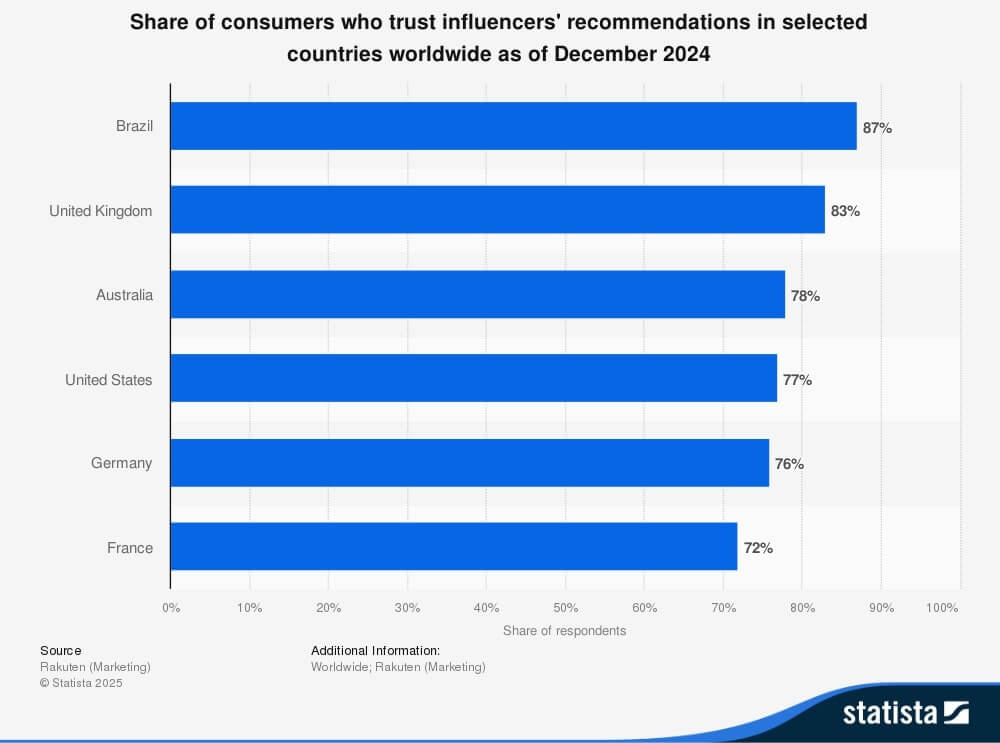
More than 77% of US consumers trust influencer recommendations
- More than 95% of car buyers search online before purchasing a vehicle, demonstrating the importance of maximizing use of digital marketing channels.
- Among the most impactful digital marketing methods for the automotive industry is influencer marketing. According to inBeat, more than 36% of auto shoppers use influencer marketing as a part of their decision-making process when purchasing their next car.
- Additionally, over 60% of car buyers visit a car dealership or brand’s website after viewing a video about a certain vehicle, showcasing the impact of video marketing and user-generated content.
- 46% of consumers consider car and automotive influencer marketing content to be trustworthy sources of information.
- Automotive search ads achieved the highest conversion rate (12.6%) of any industry in 2024, demonstrating the effectiveness of targeted influencer ads in driving sales.
- Social media is essential for informing and inspiring car buyers, with more than 90% of consumers reporting that they consult social media when researching their next car purchase.
- Given the massive impact of social media, 65% of car brands and marketers reported they planned to increase their social media advertising spending in 2024.
Why Influencer Marketing Works for Automotive Brands
The numbers speak for themselves—consumers trust influencers and look to them before making purchasing decisions, big and small. Influencers’ ability to promote their favorite products through storytelling and authentic testimonials makes them valuable spokespersons for brands, especially in the automotive industry. Influencer marketing presents an amazing opportunity for automotive brands to target niche communities of consumers, including those who are passionate about classic cars, performance vehicles, EVs, and off-road automobiles. Additionally, influencer marketing can be a valuable strategy targeting various lifestyle categories, including travel, technology, and sustainability.
How Top Automotive Brands Are Partnering With Influencers
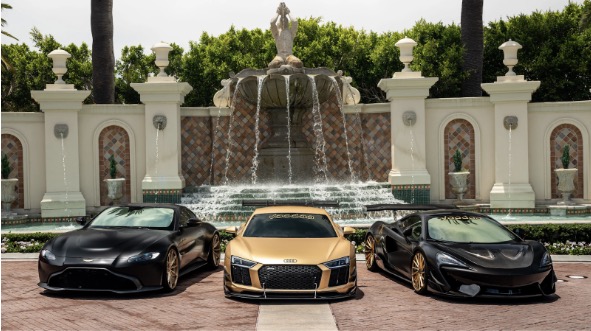
Sportscars featured by Voodoo Designs
Among the top automotive brands that work with influencers are Voodoo and Kia. Voodoo Design, which crafts bold, high-performance exhausts for motorsport vehicles, partnered with influencer Will Collette to serve as an in-house content creator, producing 2-5 TikToks daily and 2 vlogs weekly. “Voodoo took a big risk on me because they weren’t sure they could afford an in-house creator,” Will shared with Forbes. “Yet this is a great testament to how important it is to have somebody on a daily basis creating content for you and sharing it across platforms. A number of customers have come in strictly because of Instagram, or even TikTok, to spend tens of thousands of dollars with Voodoo because of the content I’m making.” To Will and Voodoo, this response from consumers was an almost immediate, measurable ROI, beyond the usual social media engagement KPIs.
Similarly, Kia has employed an influencer marketing strategy targeting consumers, particularly Gen Z and Millennial social media users. According to a report from Brand Vision Insights, Kia’s social media engagement increased by 15% year-over-year after kickstarting its influencer strategy in 2022, thanks to creator partnerships and interactive content that appealed to younger audiences. Kia recently shifted to a new influencer marketing strategy, embracing micro-influencers for authenticity and relevancy.
Which Influencers Work Best for Automotive Influencer Marketing?
The type of influencers that work best for automotive influencer marketing depends on your brand’s objectives, budget, and campaign strategy.
Different tiers of influencers offer unique advantages — from mass reach to niche authenticity.
| Influencer Type | Follower Range | Best For | Example Use Case |
|---|---|---|---|
| Macro-Influencers & Celebrities | 500K+ followers | Large-scale brand awareness, high-visibility campaigns, luxury launches. | Hyundai x BTS or Porsche x Chris Brown collaborations generating millions of impressions. |
| Mid-Tier Influencers | 100K–500K followers | Balanced reach and engagement, product demos, and feature promotions. | YouTube reviewers covering new EV technology or model comparisons. |
| Micro-Influencers | 10K–100K followers | Regional campaigns, dealership events, strong audience trust. | Local car detailing influencer showcasing a new vehicle at a dealership. |
| Nano-Influencers | <10K followers | Hyper-targeted engagement, community-driven storytelling. | Local car enthusiast sharing behind-the-scenes experiences. |
| Non-Automotive Lifestyle Influencers | Varies | Expanding reach beyond car enthusiasts; lifestyle storytelling. | Travel influencer showcasing a road trip in an eco-friendly SUV. |
The Influencer Marketing Factory’s Automotive Influencer Marketing Case Studies
Hyundai
View this post on Instagram
- The Background: The Hyundai Santa Fe, introduced in 2000, was Hyundai’s first SUV. Named after Santa Fe, New Mexico, it aimed to blend family comfort with SUV utility. The 2024 Santa Fe is the latest version, focusing on comfort, space, and tech. It’s promoted as a top-notch family SUV with a roomy interior, including more head and legroom, and a big cargo area. Inside, it’s packed with modern features like wireless phone chargers and a UV-C sanitizer tray. Under the hood, it comes with a 2.5-liter turbo engine for the U.S. market, along with other engine options.
- The Solution: Hyundai embarked on a dynamic marketing journey for the launch of their new vehicle, the Hyundai SANTA FE, by collaborating with the Influencer Marketing Factory. This innovative campaign was strategically designed to harness the power of influencer marketing across popular social platforms like Instagram, TikTok, and YouTube. Key influencers were invited to the vehicle’s launch event in New Mexico, where they had the opportunity to create and share their unique content, showcasing the Hyundai SANTA FE’s features and capabilities.
- By the Numbers
- 7.5M Instagram Combined Followers
- 5.8M TikTok Combined Followers
- 2.5M YouTube Combined Followers
- 1.2M Instagram Combined Impressions
- 160K TikTok Combined Views
- 22.5K YouTube Combined Views
Check out our full Hyundai Case Study
Omoda
View this post on Instagram
- The Background: In preparation for the launch of its new vehicle, Omoda recognized the importance of connecting with its target audience in a way that felt genuine and engaging. To achieve this, they partnered with The Influencer Marketing Factory, seeking a fresh approach that would build excitement and raise awareness through influencer marketing. The goal was to craft a campaign that not only highlighted the vehicle’s unique features but also resonated authentically with potential customers, using creative storytelling that stood out in a competitive market.
- The Solution: To bring this vision to life, The Influencer Marketing Factory collaborated closely with Omoda to support the launch by sending 2–3 UK-based influencers to attend the Eco User Summit in Wuhu, China. This strategic move allowed the influencers to experience the event and share their perspectives through content tailored to their unique styles. The campaign encouraged creators to showcase the vehicle in dynamic and relatable ways that captured the attention of their audiences, ultimately driving brand awareness and excitement around Omoda’s latest release.
- By the Numbers
- 1.32M Combined Views
- 5.4% Engagement Rate
- 6,588 Sticker Taps
- 40 Pieces of Content
Check out our full Omoda Case Study
BYD
- The Background: The Influencer Marketing Factory partnered with BYD for the promotion of their new Hybrid vehicle (BYD Seal U DM-i) launch onto the UK Market.
- The Solution: The campaign’s creative concept focused on finding the best and most affordable family outings across the UK (Wales, England, Scotland, and Northern Ireland) while showcasing the brand-new BYD Seal U DM-i. The content allowed each influencer to express their unique style, while still emphasizing the key elements of the brief. As a result, the campaign produced high-quality content that resonated with influencers’ audiences and aligned with the core objectives.
- By the Numbers
- 749.7K Instagram Combined Views
- 288K TikTok Combined Views
- 2.1M Instagram Stories Impressions
- 2M Instagram Stories Reach
The Do’s and Don’ts of Automotive Influencer Marketing
Not sure where to start with automotive influencer marketing? Here are some of our Top 5 Do’s and Don’ts of Automotive Influencer Marketing.
| Automotive Influencer Marketing Do’s | Automotive Influencer Marketing Don’ts |
| 1. Collaborate with creators that align with your brand’s values ✅: In order to make your campaign feel as authentic as possible, the creators you collaborate with must align with your brand’s values. Are they brand safe? Does their lifestyle and content align with your brand? This may seem like a simple “do,” but brands often make the mistake of not properly vetting creators and opting to collaborate with mega-influencers who don’t reflect their mission or core values. | 1. Over-script influencer marketing content 📝: Effective influencer marketing finds the balance between delivering key sales points and maintaining the creator’s voice and style. Overly controlling and scripting influencer marketing content for your brand can come off as forced and untrustworthy. Look for ways to collaborate on the messaging of your campaign with selected influencer partners to be as authentic as possible. |
| 2. Encourage authentic storytelling from influencers 💬: Storytelling is one of the most popular and effective methods when piecing together influencer marketing campaigns, as creators can showcase their personality and experiences authentically. Storytelling makes promotional content feel more personable, fun, and inspiring! | 2. Ignore niche, non-car creators for partnerships 👀: Car-lovers aren’t the only ones purchasing vehicles–so are parents, travellers, tech enthusiasts, and more. Ignoring creators from other niches limits the audience of your influencer campaign and thus, its potential success. Don’t forget to reevaluate the buyer personas for your brand and which diverse creators would be most effective for them. |
| 3. Take an experience-based approach with full-product access 🚗: It’s one thing for a creator to speak about a car’s amazing features, but it’s another for them to take fans “behind the wheel.” Try hosting exclusive events for influencers to showcase the behind-the-scenes of an exciting new vehicle launch, making viewers feel like insiders and eager to test-drive the vehicles themselves. | 3. Focus too harshly on vanity metrics 🏆: Not all large followings translate to great impact. When utilizing influencer marketing for your automotive brand, prioritize metrics like comment sentiment, click-through rates, and other KPIs besides strictly likes and views. What conversations are fans having in the comments sections? Are they interested in learning more about your brand or product? What content is driving more shares or reposts? |
| 4. Measure influencer marketing ROI with clear KPIs 📈: Setting measurable goals for your next automotive influencer marketing campaign is essential. Partnering with The Influencer Marketing Factory is a great option, as we are experts in performance data tracking and ROI measurement for creator campaigns. | 4. Disregard important marketing regulations and vehicle disclosures 👍🏼: All automotive marketing must adhere to strict guidelines and regulations regarding safety claims, fuel efficiency, and other key factors. Additional, influencers must also follow FTC guidelines and clearly tag their content as sponsored or paid promotional content to not mislead fans. |
| 5. Utilize influencers across multiple campaign stages 🧩: Shift your perspective on influencer marketing to recognize it as a full-funnel strategy for your brand! Mega or macro-influencers are great assets for generating awareness, while micro-influencers are great options for engaging audiences in the consideration phase with detailed reviews. Regardless of what campaign stage you’re at, there is an ideal influencer to partner with! | 5. Overlook long-term influencer partnerships 📱: One-off campaigns can be effective for stand-out vehicle launches, but long-term influencer partnerships or ambassador programs can be amazing tools for brand growth and success. Long-term partnerships also allow influencers to integrate automotive brands into their regular content and lifestyle, resulting in a stronger, lasting impression on viewers. |
Best Practices for Automotive Influencer Marketing
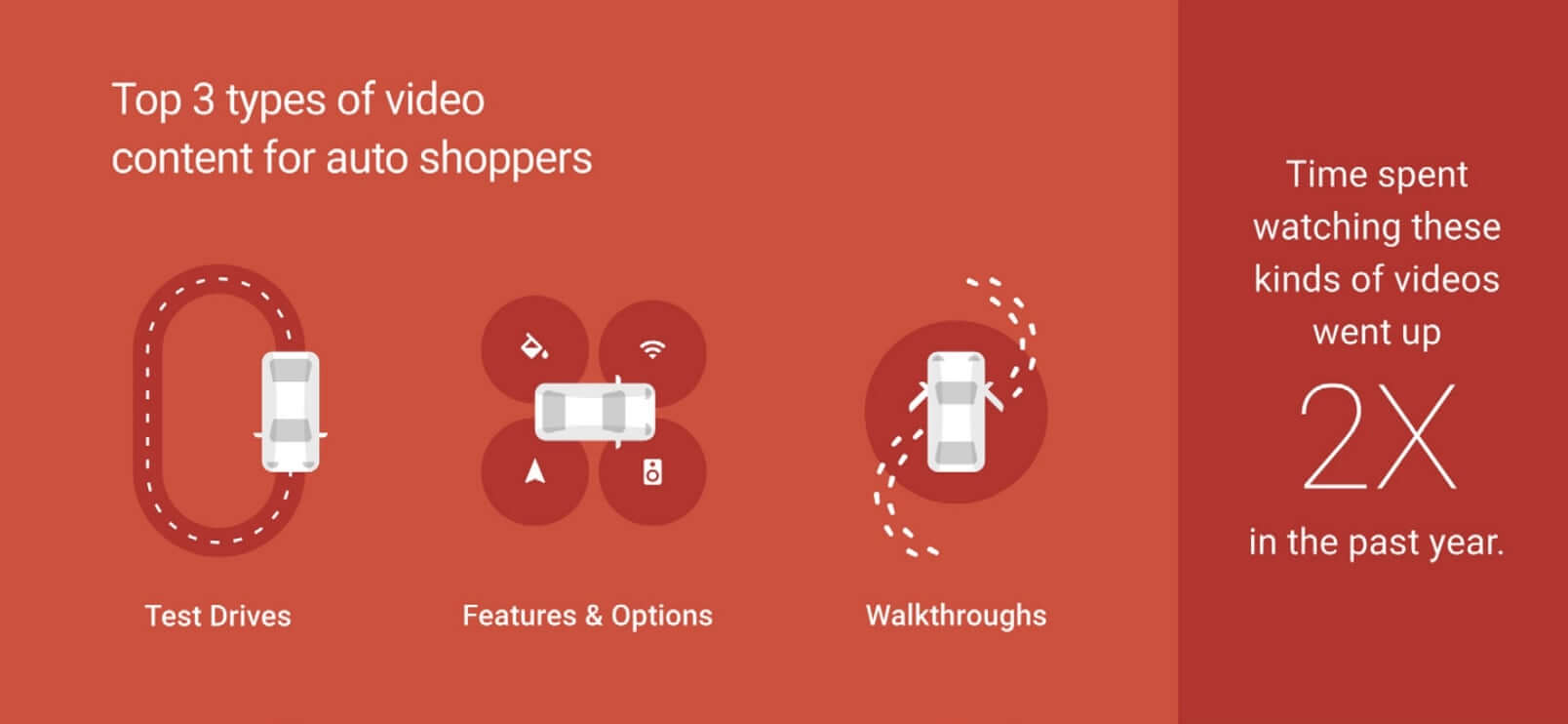
Think With Google outlined the top 3 types of video content for auto shoppers.
-
Leverage Video-First Strategies
According to Porch Group Media, more than 70% of consumers who watched YouTube videos to inform their car buying decision process were inspired by car-related content. The top three car video categories for YouTube viewers include the following
- Test-drives of specific vehicle makes and models
- Videos breaking down and comparing the features of different makes and models
- Detailed walk-throughs of vehicle interiors and exteriors
Besides collaborating with YouTubers for automotive influencer marketing, Instagram is another critical platform for creator partnerships and video marketing. Financial Express reports that Instagram leads ahead of other social platforms in terms of influencer recommendations, with 56% of users claiming they rely on Instagram creator endorsements. TikTok is another key channel to leverage when partnering with influencers given how it is one of Gen Z’s preferred platforms for brand discovery and research.
-
Use a Mix of Influencer Tiers/Followings
As mentioned in our Do’s and Don’ts of automotive influencer marketing, you should be utilizing different sizes and niches of creators at different stages of the marketing funnel. Macro-influencers can deliver large-scale awareness for your automotive brand’s new vehicle launch, while micro-influencers are optimal for building trust with audiences and engaging with niche communities. Moreover, nano-influencers are great tools for hyper-local targeting, making them ideal partners for car dealerships rather than global automotive brands.
-
Find Innovative Ways to Make Your Audience Feel Like an Insider
Theres nothing audiences love more than feeling like they’re an insider or the early adopter of a trend. So how can you achieve this with automotive influencer marketing? Collaborate with influencers to show first looks and teasers of new vehicles or invite their fans to exciting launch events. Taking on this approach to influencer marketing not only excites fans but also strengthens public perception of your auto brand as forward-thinking and community-focused. Get in touch with our team at The Influencer Marketing Factory to learn more about collaborating with influencers for exciting events like these.
-
Explore Non-Traditional Content Styles
So video marketing is one of the best methods for automotive influencer marketing, but what content topics and styles are most effective. Rather than simply going with car reviews or breakdowns, consider fun non-traditional content styles to capture the attention and interest of potential buyers. Here’s a list of some innovative automotive influencer marketing concepts to level-up your next campaign:
- ASMR car detailing videos
- Funny POVs or skits about car culture or purchasing a new vehicle
- Cinematic short films
- Sensory-focused videos showcasing the textures, features, etc. of a vehicle
- A day-in-the-life vlog going from location to location or a car buying vlog
-
Include Influencer Marketing in Your Omnichannel Marketing Strategy
Influencer marketing content is too valuable to be siloed. Rather than restricting influencer content to your brands’ social platforms, find new ways to integrate creator partnerships at different touchpoints. Embed influencer testimonials and related content on your brand’s official website, feature influencers in email marketing content to catch users’ attentions, or even go “traditional” by showcasing influencers in television commercials. Paid ads are another amazing method to include influencer marketing in your omnichannel marketing strategy. By reaching consumers across different touchpoints, you can effectively reinforce your brand’s messaging and ultimately move potential buyers down the funnel.
Amplify your reach with Influencer Marketing
Partner with The Influencer Marketing Factory to leverage our extensive network of premium influencers. Streamline your campaign management from inception to conclusion, and attract your desired audience with compelling and engaging content.
FAQs About Automotive Influencer Marketing
1. What is automotive influencer marketing?
Automotive influencer marketing is a strategy where car brands and dealerships collaborate with social media creators to promote vehicles, car accessories, or related services. These campaigns often include creator endorsements across platforms like TikTok, Instagram, and YouTube. They may also involve in-person activations, events, or test drives where influencers share authentic experiences. Campaigns can include creators of all sizes — from nano to macro-influencers — depending on the brand’s goals and audience.
2. How can influencer marketing benefit car dealerships and automotive brands?
Influencer marketing helps automotive brands and dealerships connect with modern buyers who rely heavily on social media for product discovery and recommendations. Local dealerships can collaborate with nearby nano or micro-influencers to reach regional audiences, while global brands can leverage macro-influencers for large-scale awareness. The result is stronger brand trust, higher engagement, and measurable ROI. For brands looking to launch a campaign, partnering with The Influencer Marketing Factory ensures expert creator selection, campaign management, and performance tracking.
3. Which social media platforms work best for automotive influencer marketing?
The top platforms for automotive influencer marketing are YouTube, Instagram, and TikTok.
-
YouTube is best for long-form content such as car reviews, feature breakdowns, and tutorials.
-
Instagram excels in storytelling through Reels and high-quality imagery.
-
TikTok drives viral reach with short-form, authentic, and creative automotive content.
Each platform serves a different funnel stage — from awareness (TikTok) to consideration (YouTube) to conversion (Instagram).
4. How do I select influencers for an automotive influencer marketing campaign?
Choosing the right influencers depends on your goals, budget, and target audience. Brands should consider:
-
The influencer’s niche (e.g., car reviews, lifestyle, travel).
-
Audience demographics and engagement rate.
-
Content style and brand alignment.
Working with a specialized agency like The Influencer Marketing Factory helps identify top-performing creators, vet authenticity, and manage end-to-end campaign execution.
5. What are some case studies or examples of automotive influencer marketing?
The Influencer Marketing Factory has executed successful campaigns for brands like Hyundai, Omoda, and BYD. These projects have included influencer collaborations across TikTok, Instagram, and YouTube, generating millions of views and measurable engagement. For example, the Hyundai Santa Fe campaign achieved over 7.5 million combined followers and 1.2 million impressions. Visit our website to explore more case studies and campaign results.
6. Does TikTok work for car brands?
Yes — TikTok is one of the most effective platforms for automotive influencer marketing in 2025. Short-form videos such as car reveals, test drives, POV experiences, and storytelling content perform extremely well. Brands like Kia, Mercedes-Benz, and Hyundai have used TikTok to connect with younger audiences, increase engagement, and drive sales inquiries.
7. What KPIs should automotive brands track in influencer marketing campaigns?
Key performance indicators (KPIs) depend on your campaign objectives. The most common ones include:
-
Reach & impressions (brand awareness)
-
Engagement rate (likes, comments, shares)
-
Click-through rate (CTR)
-
Cost per engagement (CPE) or Cost per view (CPV)
-
Leads or test drive bookings
Tracking ROI through unique links or promo codes helps measure direct conversions from influencer content.
8. How do car brands measure ROI from influencer marketing?
Car brands can measure ROI by combining quantitative metrics (traffic, leads, conversions) and qualitative ones (brand sentiment, content performance). Tools like UTM tracking, affiliate links, and Google Analytics goals help attribute sales or leads to influencer campaigns. For local dealerships, ROI may be measured through increased foot traffic, inquiries, or vehicle reservations following a campaign.
10. What are the biggest trends in automotive influencer marketing for 2025?
-
AI-driven influencer selection for better performance prediction.
-
EV (electric vehicle) influencer campaigns focusing on sustainability.
-
UGC (user-generated content) integrated into paid media.
-
Long-term ambassador partnerships instead of one-off deals.
-
Mixed-tier influencer strategies combining macro reach with micro authenticity.
These trends are reshaping how car brands engage digital audiences through influencer collaborations.