
04 Feb How Creators Monetize in 2026: Key Takeaways For Brands and Marketers
Summary
Creator Monetization 2026 Trends
Creator monetization is entering a new phase in 2026, shaped by platform volatility, evolving brand expectations, and creators increasingly operating as business owners rather than just content publishers. As discussed by industry experts during a recent LinkedIn Live session, today’s creators are diversifying revenue streams, prioritizing ownership and IP, and positioning themselves as strategic partners to brands. These shifts are redefining how creators earn, how brands collaborate, and what sustainable success looks like in the modern creator economy.
The Current State of the Creator Economy
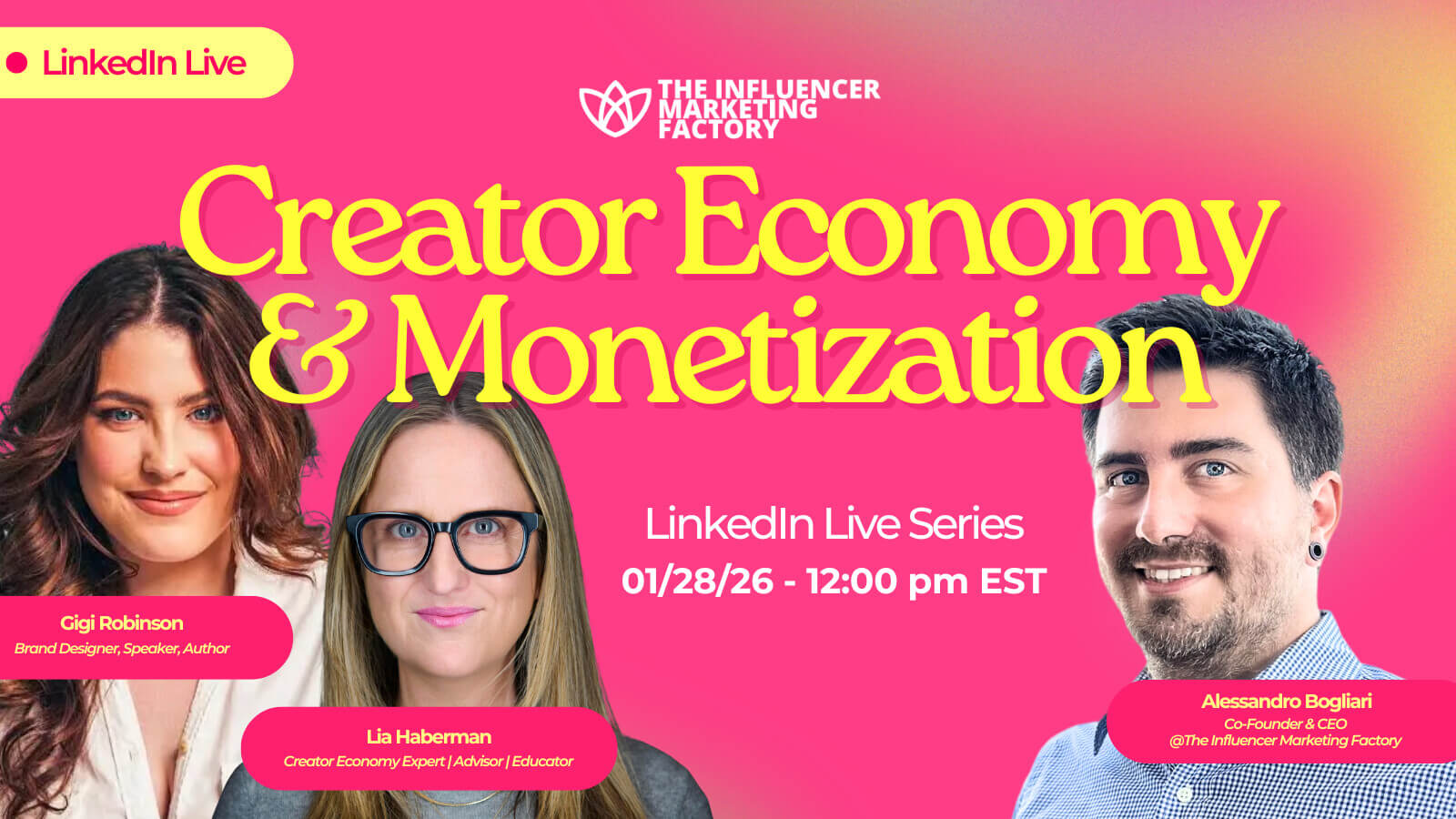
In a recent LinkedIn Live session, industry leaders Alessandro Bogliari (CEO & Co-Founder, The Influencer Marketing Factory), Lia Haberman (Creator Economy Expert, Advisor, & Educator), and Gigi Robinson (Brand Designer, Speaker, & Author) discussed the current state of creator monetization and how brands can strategize their approach to influencer partnerships. Their insights reveal both the opportunities and the challenges ahead.
 |
 |
| Lia Haberman Creator Economy Expert, Advisor, & Educator |
Gigi Robinson Brand Designer, Speaker, & Author |
| Lia Haberman is a social media and influencer marketing instructor at UCLA Extension. Lia is well-known across LinkedIn and other platforms for her creator economy expertise as well as her email newsletter ICYMI. | Gigi Robinson is a leading brand designer, speaker, and content creator. Gigi is the author of A Kids Book About Chronic Illness and is well known for her various brand ambassadorships, like with Adobe. |
Key Creator Monetization Takeaways
Monetization Is Expanding Beyond Brand Deals
Brand partnerships remain a core revenue stream for creators, but they are no longer enough on their own. As the creator economy matures, more creators are prioritizing ownership, stability, and long-term growth instead of relying solely on one-off sponsorships.
Many creators are also realizing that treating social platforms as the business itself creates risk and instability. On the other hand, the most resilient creators are building businesses powered by their content but not dependent on it. “A lot of creators are still stuck in their content on the social platforms is their business, and that is what leads to burnout,” Robinson explained. “That is what ends up leading to a short stint as a creator.”
Creators Are Building Businesses That Outlive Platforms
A growing number of creators are monetizing their expertise through services and ventures that extend beyond their personal brand. This includes freelance creative work, consulting, education products, public speaking, and IP-driven projects such as newsletters, courses, and books.
Creator economy experts note that influencers who develop revenue streams apart from AdSense and brand deals are better positioned to scale sustainably and challenge platform instability. As outlined by Robinson, “the biggest game changer in the industry [for creators] is building something that does not rely solely on your image and likeness in the niche that you grew your platform in.”
Creators as Consultants, Advisors, and Content Architects
Brands are beginning to engage creators as consultants, advisors, and creative partners by leveraging their deep understanding of culture, audience behavior, and platform dynamics.
Rather than treating creators purely as distribution channels, forward-thinking brands are inviting them into ideation, strategy, and even content production for owned brand channels. “We’re thinking of them as coming in and helping us build out content and series that people are going to want to watch,” Haberman added.
IP, Ownership, and the Value of Distinctiveness
As AI-generated content becomes more prevalent, originality and IP ownership are emerging as key differentiators. Creators who invest in protecting their intellectual property through trademarks, copyrights, and clearly defined formats are better positioned to build defensible brands.
At the same time, personality has become a critical asset. In an environment flooded with generic content, audiences and brands alike are gravitating toward creators with a clear point of view, recognizable voice, and consistent creative identity. “Personality is going to be what sets you apart, what’s built your IP, what makes the difference between you and another creator,” Robinson explained.
Equity and Ownership: Aspirational, But Still the Exception
While equity partnerships between creators and brands generate significant attention, they remain relatively rare. High-profile examples have shown the potential upside, but these arrangements typically require precise timing, strong alignment, and significant due diligence.
For most creators, equity is not a replacement for paid partnerships, but a complementary opportunity once meaningful leverage exists. Brands should approach equity selectively as well, recognizing that ownership structures are complex and not suitable for every collaboration.
Next Steps For Brands and Marketers
As creator monetization models evolve, brands should adjust how they evaluate, engage, and collaborate with creators. Here are the key actions brands should prioritize in 2026:
1. Look Beyond Sponsored Content
Assess creators’ broader business models, IP ownership, and long-term goals to identify partners built for sustained collaboration.
2. Engage Creators Earlier in the Process
Involve creators in ideation and strategy, not just execution, to unlock deeper cultural relevance and stronger performance.
3. Align With Business-Minded Creators
Creators operating as founders and consultants often bring greater strategic value than those focused solely on posting.
4. Respect Creator Stages and Constraints
Tailor partnership structures based on where creators are in their growth cycle and content creation journeys, balancing opportunity with realism.
5. Invest in Long-Term Value
Shift from transactional activations toward relationships that compound over time through trust, consistency, and shared goals.
Amplify your reach with Influencer Marketing
Partner with The Influencer Marketing Factory to leverage our extensive network of premium influencers. Streamline your campaign management from inception to conclusion, and attract your desired audience with compelling and engaging content.