
17 Sep UGC Usage Rights in 2026: What Brands Need to Know Before They Launch
Summary
A customer posts a 20-second video of your product that’s better than anything your team shot last quarter. Beyond that, it already has 40k views, and your paid social lead wants it in as an ad by Friday.
This is where many brands get into trouble. The instinct is to treat public content as available content, but the person who filmed the video owns it, and a tag and/or mention is not the same thing as permission. The gap between “we found great content” and “we are legally allowed to run this” is usage rights, and in 2026 it is one of the most common places we see brands create risk for themselves without realizing it.
Usage rights are not as complicated once you understand the structure. What makes them expensive is discovering the rules after a campaign is already live, when your only options are pulling creative in mid-cycle or paying a renewal fee under pressure. Below is what UGC actually covers, what each usage structure buys you, what happens when brands skip the paperwork, and how to lock permissions down prior to a launch.
This post is written for marketers, not lawyers. It is general guidance rather than legal advice, so loop in counsel before finalizing contract language.
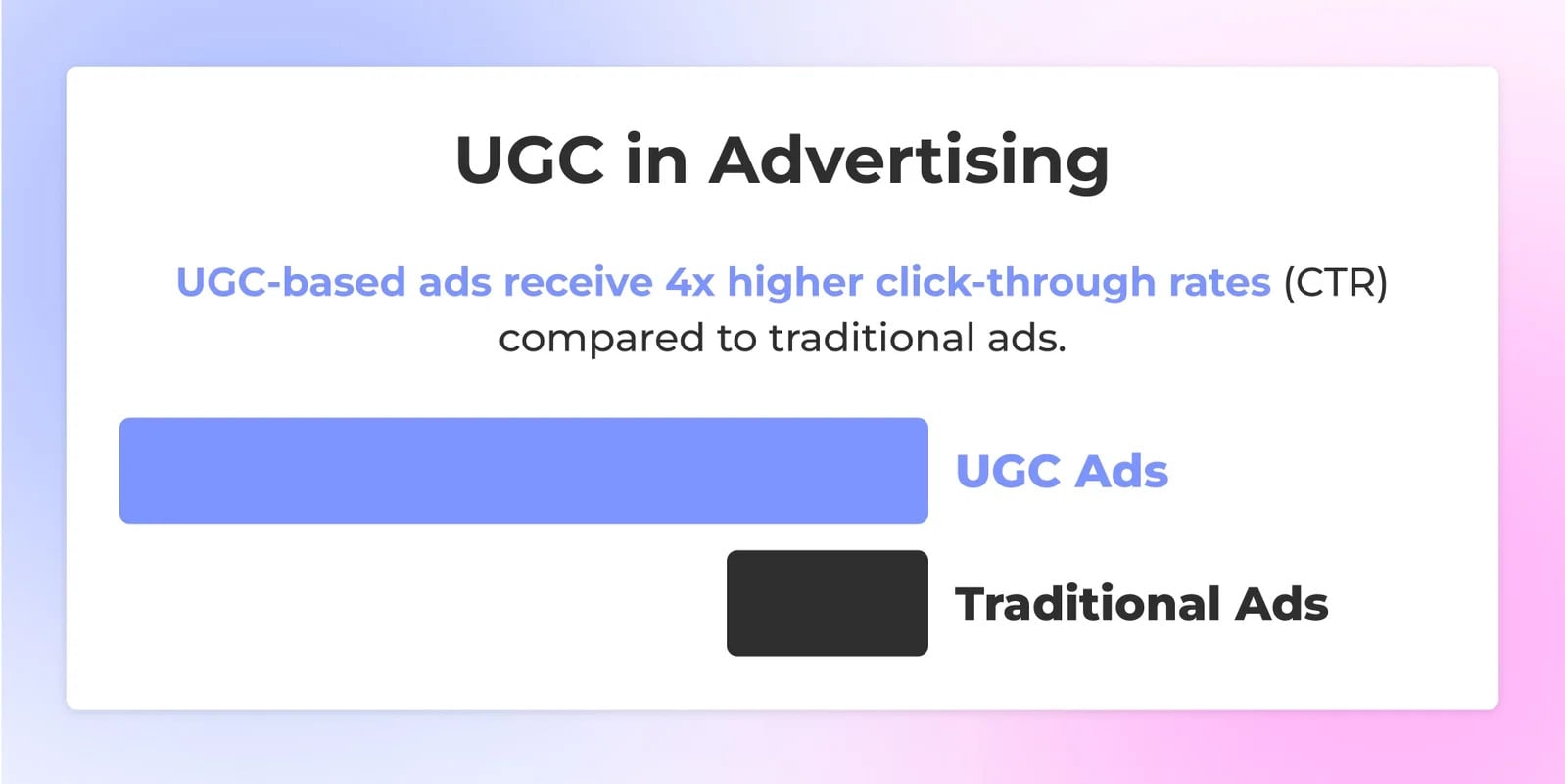
UGC ads strongly outperform traditional ads on digital platforms. Source: Influee
What is UGC?
What is User-Generated Content?
User-generated content is any content created by someone other than the brand that features, reviews, or references that brand. In practice, marketers use the term to describe two fairly different things, and the difference matters a great deal once usage rights enter the conversation.
The first is organic UGC: unpaid content from real customers. Unboxing videos, reviews, tagged Stories, a TikTok about a product someone genuinely likes. Nobody was briefed, and nobody was paid, which means the brand had no agreement in place and no default right to reuse any of it.
The second is commissioned UGC, sometimes referred to as paid UGC or creator-produced UGC. Here, a brand hires a creator to produce content that looks native and unpolished on purpose, usually for the brand’s own channels and paid ads rather than the creator’s feed. It is a production service with a licensing component attached. The rate the creator quotes typically reflects both the content itself and how the brand plans to use it.
Both categories carry the same underlying legal reality. Copyright belongs to the person who creates the content from the moment of creation, so the brand needs a license either way. The difference is that commissioned UGC gives you a natural moment to negotiate the terms, while organic UGC requires you to go back and ask.
Why Are Brands Investing in UGC?
Brand interest in UGC deals and various usage structures can be tied to positive user sentiment and higher engagement compared to traditional creator or influencer marketing. The following are some key stats influencing the growing investment in UGC campaigns from Archive:
- Archive reports that 92% of consumers trust peer recommendations over brand messaging, and 84% trust brands more when they feature user-generated content in marketing campaigns.
- Archive also reports that UGC generates 6.9x more engagement in comparison to brand-generated content and 28% higher engagement rates overall.
- While only 16% of brands have a dedicated UGC strategy, Archive reports that user-generated content converts 74% higher than online pages or sites without it and increases revenue per visitor by over 154%.
- Digital ads featuring user-generated content see approximately four times higher click-through rates (CTRs) and a 50% lower cost-per-click (CPC)
- Younger consumers respond positively to UGC ads and campaigns, especially Gen Z users. According to research from Archive, 61% of Gen Z prefer user-generated content over all other content formats.
Key UGC Trends & Statistics for Marketers
In order to build the most effective UGC and usage strategy, brands must analyze current trends and performance. The following are some key user-generated content trends and statistics that point to opportunities for engagement and growth.
- Mordor Intelligence reports that North America leads UGC platform revenue at 38.12%.
- The 2026 Influencer Marketing Benchmark Report found UGC and static content to be viewed as mid-tier, supporting formats rather than top performers. The report also discovered that 31% of brands rank user-generated content as highly effective, and 25% rank static content the same as UGC.
- When considering which content types will work for your brand, Influee found that high-quality reviews from UGC creators are the most effective for moving the “sales needle.” Average star rating is a close second and can also be incorporated into UGC content, such as with TikTok Shop or Amazon Affiliate ratings.
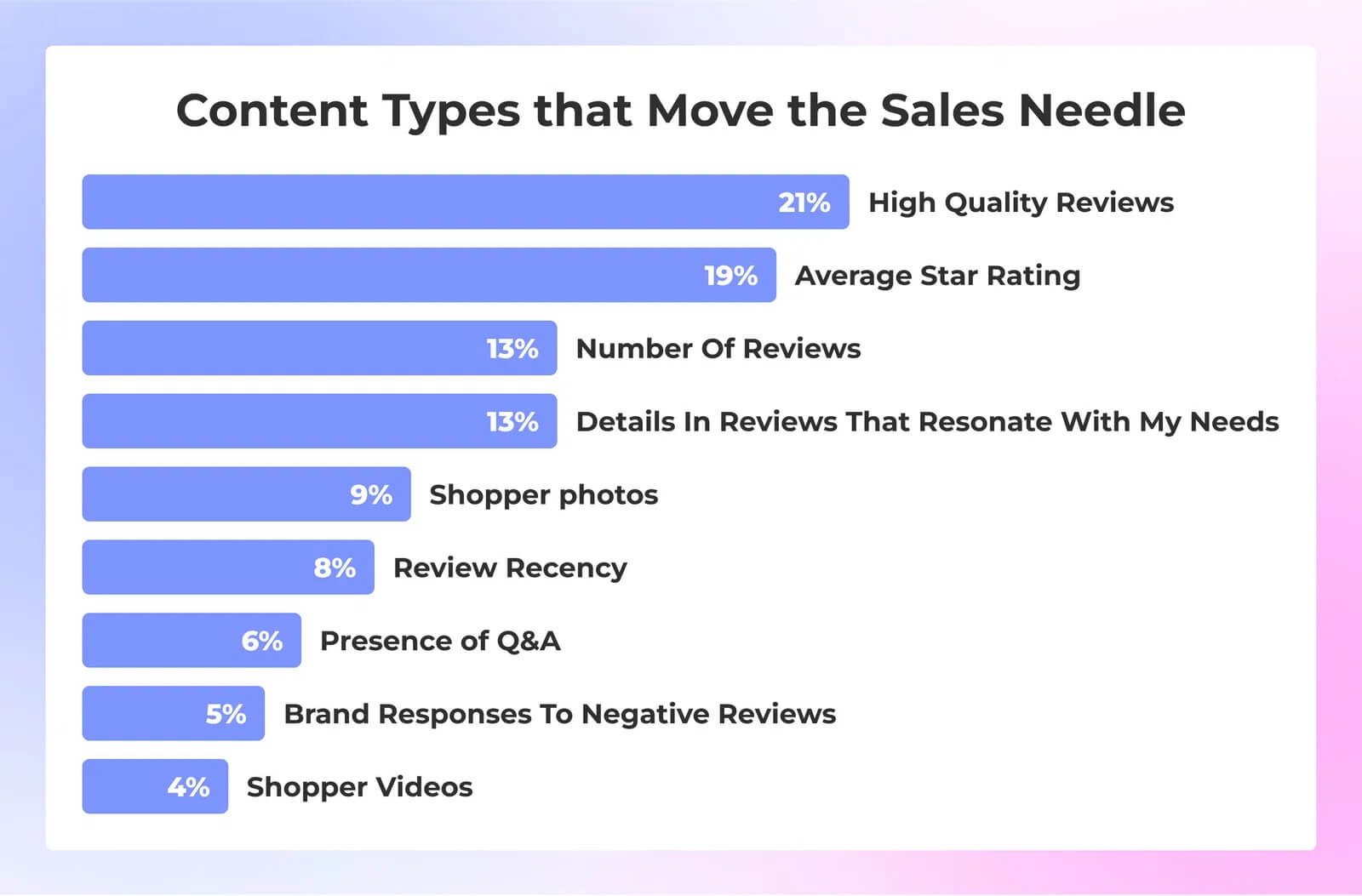
High-quality reviews top UGC formats for sales performance. Source: Influee
Navigating Usage Rights For UGC
The three main structures for UGC usage rights include perpetual, organic, and paid ads usage rights. It is a basic rule of thumb that the longer the period of usage, the higher the rate to be paid to a UGC creator or influencer. Usage right structure is subject to your brand’s needs and budget, so refer to the following definitions and guide as a simplified frame of reference when planning your next creator campaign. For more information on UGC campaigns and what’s possible with your budget, get in touch with our team at The Influencer Marketing Factory.
1. Perpetual Usage Rights
Perpetual usage rights allow brands to use a creator’s content indefinitely, with no time limit or restrictions, and are best suited for evergreen or long-term campaigns. Perpetual usage can be for paid or organic rights, the latter being more common across social channels and brands.
2. Organic Usage Rights
Organic usage rights generally have no set time limit, but this can also be determined by the brand or creator depending on the campaign. Organic usage covers unpaid channels, meaning that the content stays live on the brand’s social or owned channels for the agreed-upon term. It is important to note that organic usage rights do not extend to paid placements.
3. Paid Ads Usage Rights
Paid ads usage rights are almost always time-boxed, with an industry standard of anywhere between 30 and 90 days. Following the paid ads usage window, brands must renew or pay an additional fee to creators to keep running the UGC in ads. Rates for paid ads usage also increase based on the number of channels where paid ads will be run as well as the timeline.
| Usage Type | How It Works | Pricing |
|---|---|---|
| Perpetual Usage Rights | No time limit/restrictions, indefinite usage of creator content | Higher/highest upfront cost, no renewal costs due to perpetuity |
| Organic Usage Rights | Unlimited/definitive duration of UGC on owned/unpaid channels only | Typically lower cost than paid UGC usage rights |
| Paid Ads Usage Rights | Often have a time limit (30/60/90 days, sometimes 120), with renewal required after expiration | Cost increases as renewal terms increase; more days of paid ads usage translate to higher costs |
What Happens If You Use UGC Without Permission?
Legal Risks and Infringement Penalties
Copyright attaches automatically the moment content is created. The creator does not need to file anything, add a watermark, or write a rights notice in their bio. Every repost, ad, website banner, ot email that uses someone else’s content without a license is infringement, even when the brand is the subject and even when the creator tagged you first.
Consequences escalate in stages: a DMCA takedown and a strike against your account, then a cease and desist, then a demand for retroactive licensing fees that run higher than proper licensing would have. Under the U.S. Copyright Act, statutory damages for willful infringement of a registered work can reach up to $150,000 per work. Copyright is also not the only exposure. Using a recognizable person’s likeness in advertising can trigger right of publicity claims, and 3rd party and visible logos carry their own licensing chains. A creator granting you rights to their video does not grant you rights to the trending song underneath it.
Reputational and Creator Relationship Risks
The legal risk is the one brands budget for. The reputational risk usually costs more.
Creators are a small, yet well-connected market, and calling out a brand for reposting without credit or payment is reliably good content. A screenshot of your ad next to the original post travels quickly, and the story writes itself. The longer-term damage is to your talent pipeline, because creators share informal lists of brands that honor usage terms. Once you land on the wrong list, rates can go up, and response rates can go down.
How to Secure UGC Usage Rights Before You Launch a Campaign
- Get Permission in Writing
A comment thread is not a license, and neither is a creator replying “sure!” to a DM. Written permission does not have to be a 12-page contract, but it does need to name the exact assets, the channels, the territory, the duration, edit rights, any exclusivity, and what happens when the term ends. Platform terms of service do not grant brands the right to reuse customer content in advertising, and hashtag campaigns only help if the terms are visible and the creator has agreed to them.
- Match the License to Where You’ll Use the Content
Rights are priced by scope, so the wrong scope wastes money in both directions. Perpetual paid rights for creative you will test for three weeks is overspending, and organic-only rights for content your performance team plans to put behind spend is a compliance problem waiting to surface. Start from the media plan: which platforms, paid or organic, how long, and which markets. Whitelisting needs its own line, since running an ad from the creator’s account through Meta Partnership Ads or TikTok Spark Ads is a separate permission from licensing content for your brand handle.
- Track Expiration Dates and Renewals
Time-boxed rights fail quietly. Nobody gets an alert when a 60-day paid window closes, and the asset keeps running because it is performing well. Build one tracker logging every licensed asset: creator, asset link, license start and end dates, approved channels, renewal cost, and where it is live. Assign one owner, set a reminder two weeks before expiration, and plan for the takedown, since expired content has to come out of the website and email templates as well as live ad sets.
- Compensate Creators Fairly
Treat usage as its own line item rather than folding it into the content fee. The content fee pays for production, and the usage fee pays for the commercial value the brand gets from running it. Price usage as an uplift on the base rate, scaled by duration, channel count, and whether the rights are paid or organic, then be transparent about that structure upfront. The cost difference between a licensed asset and an unlicensed one is usually a few hundred dollars. The cost difference after a public dispute is not.
Conclusion
Usage rights are the least glamorous part of a creator campaign and the part most likely ot derail one. The brands that handle them well are not doing anything sophisticated. They decide where content will run before they license it, they get terms in writing, they track expiration dates in one place, and they pay creators for the value they receive.
Do that consistently and rights stop being a risk and start being a competitive advantage. You move faster because your team knows what it can run, you keep top creative live instead of pulling it, and creators bring you their best work because they trust the process.
Ready to build a creator strategy designed for the long run? Work with The Influencer Marketing Factory to design and manage influencer partnerships that go beyond a single post.
Ready to Build a UGC Strategy That Drives Real Results?
Frequently Asked Questions
- What is UGC in influencer marketing?
UGC is content made by someone other than the brand that features or references it. In influencer marketing, the term covers two things: organic content from real customers who were never briefed or paid, and commissioned content from creators hired to produce native-feeling assets for a brand’s own channels and paid ads. Both require a license before a brand can reuse them.
- What are usage rights in influencer marketing?
Usage rights are the permissions a creator grants a brand to use their content, defined by where it can run, for how long, in which markets, and whether the brand can edit it. They are negotiated separately from the content fee and priced by scope, which is why a 30-day paid social license costs less than perpetual rights across every channel.
- Do I need permission to use UGC if a customer tags my brand?
Yes. Tagging a brand is not a license. It signals that someone is happy to be associated with you, but it does not transfer any right to reuse their content in ads, on your website, or on your social channels. Platform terms of service do not grant that right either. You need explicit written permission, even for a simple repost.
- Are usage rights the same as copyright?
No. Copyright is ownership, and it stays with the creator unless it is formally transferred in writing. Usage rights are a license, which is permission to use content the creator still owns, limited to the terms you agreed on. Most brand deals license usage rather than transfer copyright, so when the license expires, the brand’s right to use the content ends with it.
- How long do UGC usage rights typically last?
It depends on the structure. Paid ads usage is usually time-boxed at 30, 60, or 90 days, sometimes 120, with renewal required after that. Organic usage often runs longer or without a set end date, depending on what the brand and creator agree to. Perpetual rights have no expiration at all, which is why they carry the highest upfront cost.
- Do usage rights cover music or other people in the content?
Not automatically. A creator can only license what they own, so a rights agreement covers their footage, not a licensed track playing underneath it or a third party’s logo in frame. Trending audio on TikTok or Instagram is generally cleared for organic use only and not for paid advertising. If another recognizable person appears, you may also need a separate release for their likeness before using the content commercially.
By The Influencer Marketing Factory, a global influencer marketing agency running influencer campaigns on TikTok, Instagram, and YouTube.