
06 Oct Law and Compliance in the Creator Economy: Key Takeaways for Brands, Agencies, and Creators
Summary
New Legal and Regulatory Developments For Creators
The creator economy is maturing quickly, and so are the rules that govern it. As Congress pays closer attention and the FTC sharpens its guidance, creators, agencies, and brands are being asked to professionalize how they disclose, document, and execute influencer marketing. The message from our recent LinkedIn Live on law and compliance was clear: compliance is not only about legal risk management, it is also about building and maintaining audience trust.
Meet the Speakers
 |
 |
| Frank Poe Attorney & Founder Poe Law PLLC |
Chelsey Mori Lawyer & Founder Unbound Legal |
| Frank Poe works closely with influencers, creators, and marketers on contracts, disclosures, and brand deal structuring—ensuring everything aligns with FTC rules and protects all parties involved. | Chelsey Mori brings a modern, creator-first approach to legal protection, helping digital entrepreneurs stay compliant while scaling their businesses—from disclosures and disclaimers to IP and business formation. |
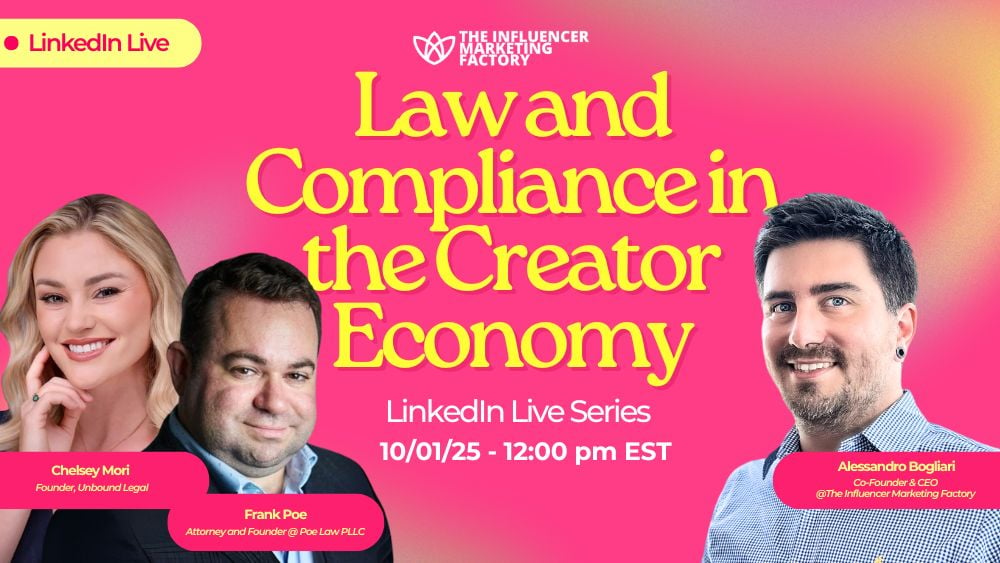
Hosted by Alessandro Bogliari, CEO & Co‑Founder of The Influencer Marketing Factory, the session featured attorneys Frank Poe, Founder of Poe Law PLLC, and Chelsey Mori, Founder of Unbound Legal. Together, they unpacked what’s changed, what’s coming, and how to operationalize compliance across platforms, formats, and regions.
Key Law and Compliance in the Creator Economy Livestream Takeaways
Creator Economy Legislation and Policy
Compliance in the creator economy is moving beyond platform guidelines and into the hands of lawmakers. Frank Poe highlighted that “compliance… all starts out in Congress,” reminding the audience that regulation begins with policymakers gaining a deeper understanding of the industry. One example is the No FAKES Act, introduced in April 2025, which would prohibit the distribution of AI-generated replicas of a person’s voice or likeness without consent. Chelsey Mori noted that this legislation is part of a larger shift. “This process is very important, and it starts with the legislators trying to understand more about the business and about the industry,” she explained. The signal is clear for marketers: policy momentum is building, and those who prepare early will be better positioned than those who react late.
FTC Endorsements and Disclosure Rules For Creators
The Federal Trade Commission has broadened its scope on endorsements, making compliance a more detailed and ongoing responsibility. Mori explained that disclosures now apply even when there’s no direct payment. Tagging a brand, sharing an affiliate link, or mentioning a company’s product can all trigger monitoring requirements. She also pointed out that the agency has cracked down on misleading practices such as fake reviews, AI-generated testimonials, and undisclosed endorsements from employees or relatives. Disclosures themselves must be prominent or “very difficult to miss,” as Mori put it, which means visible and verbal placement at the start of videos, repeated reminders during livestreams, and positioning that cannot be hidden behind “see more.” For brands, the challenge is integrating these rules into content in a way that feels authentic while meeting regulatory standards.
Influencer Marketing Contracts, Liability, and Deal Structure
When it comes to liability, the message was unmistakable: responsibility is shared. “The default is everybody gets sued,” Mori cautioned, noting that the FTC typically holds creators, brands, and agencies accountable together. This makes contracts a critical safeguard. Mori described them as “the bridge between old law and new tech,” a way to allocate responsibility clearly in a rapidly evolving landscape. Poe offered a practical framework for reviewing agreements—the REVV model, which stands for Rights, Expectations, Value, and Visibility. As he explained, “If you were to take every single provision of the agreement and rip it into little slivers, you could place them into one of these four buckets.” This structured approach turns dense legal documents into manageable tools that help both sides align on accountability.
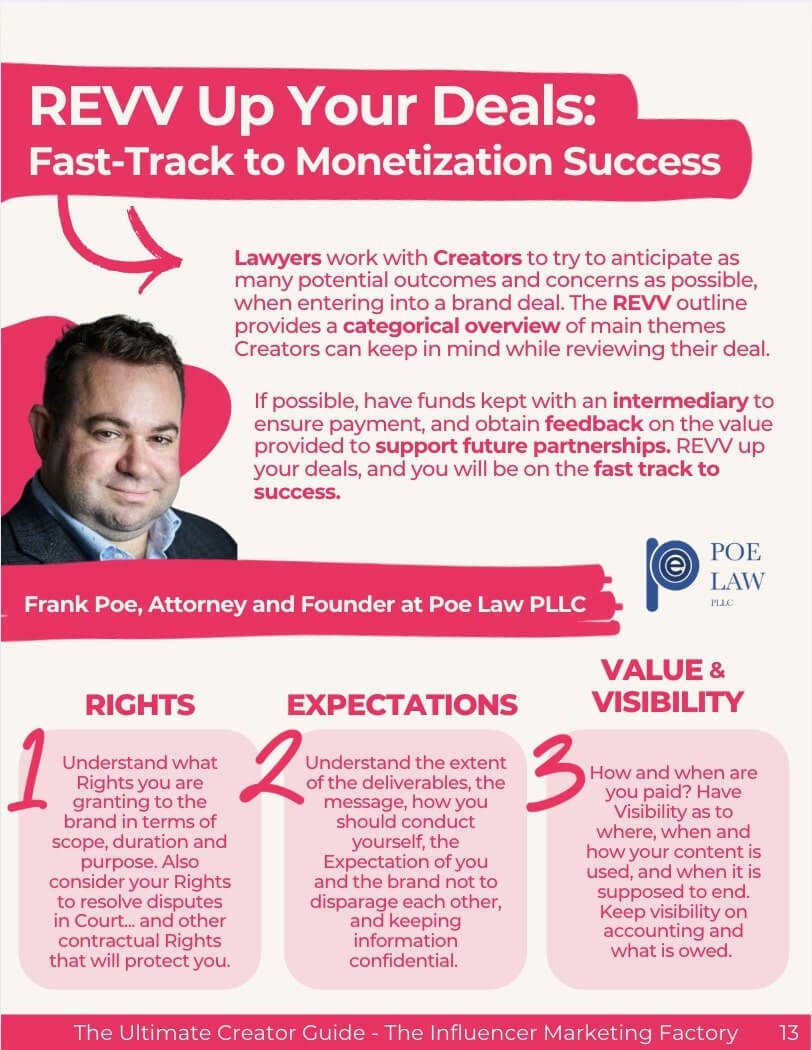
To learn more about Frank Poe’s REVV framework, check out our Ultimate Creator Guide for the full scoop on creator law and compliance.
Practical Compliance in Action
Regulations and contracts are only as effective as their execution. Mori encouraged brands to vet creators’ compliance history before collaborations and to provide clear, platform-specific disclosure guides rather than lengthy manuals. She also recommended documenting compliance by capturing screenshots of live content within the first hour of posting. Building a library of approved disclosure examples can make enforcement more efficient while ensuring consistency across campaigns. These simple operational practices can transform compliance from an afterthought into a standard operating procedure.
How AI is Transforming the Creator Economy
AI is reshaping the creator economy in both promising and risky ways. Creators are using AI-powered tools to simplify contract review and content workflows, but the same technology is also fueling deepfakes, scams, and impersonation. To combat these risks, Mori recommended takedown tools like low-T AI, which can remove most harmful content within days. Poe also shared with the livestream audience that “responsibility is key here,” urging brands to set clear boundaries around AI use and to plan enforcement protocols before issues arise.
The Risks and Benefits of Employee-Generated Content (EGC)
More brands are turning to employee-generated content as a form of authentic promotion, but this trend is not without pitfalls. Poe described EGC as “when an employer encourages their employees to post on their own accounts to promote the brand,” but he cautioned against overlooking the risks. Unlike traditional IP, influence in the creator economy is tied to the trust and audience an individual has cultivated. “That audience is probably going to follow that employee out the door,” Poe explained, highlighting the need for clear policies around ownership, consent, and compensation. Without them, brands risk legal complications and reputational setbacks.
Creator Compliance Guide for Brands and Marketers
The following is a mini guide by The Influencer Marketing Factory on how brands and marketers can navigate compliance in the creator economy.
| 📝 Build compliance into briefs and contracts: Attach per‑platform disclosure exhibits, define AI allowances, and clarify IP sources for any brand‑provided assets. |
✅ Vet for compliance, not just audience fit: Screen creators for past disclosure behavior and authenticity red flags before you engage. |
| 📸 Document everything: Capture live screenshots within the first hour, log links and dates, and keep a library of approved disclosure examples. |
👍 Make compliance easy to execute: Replace dense guidelines with concise one‑pagers. Provide examples tailored to each format and platform. |
| 👀 Define and monitor AI use: Require disclosure and pre‑approval for AI elements. Prohibit any tools that alter likeness or misrepresent products without written consent. |
🔍 Plan periodic audits: Spot check a percentage of posts weekly and remediate quickly. Watermark or fingerprint content to aid enforcement. |
Creator Compliance Guide for Creators and Managers
The following is a mini guide by The Influencer Marketing Factory on how creators and their managers can navigate compliance with current and future influencer marketing deals.
| ⚖️ Use REVV to review deals: Pressure‑test Rights, Expectations, Value, and Visibility on every agreement before you sign. |
👏 Match the medium for disclosures: Follow timing and placement best practices for photos, short‑form video, YouTube, livestreams, and affiliate environments. |
| 🎶 Verify all third‑party rights: Confirm licenses for music, fonts, footage, and likenesses—especially if the brand suggests them. |
🤖 Align on AI upfront: Disclose tools and seek approval for any AI‑generated elements that affect likeness or product representation. |
| 💻 Keep a compliance paper trail: Save briefs, approvals, live links, and screenshots. Document reshoots and edits that affect disclosures. |
🤝 Protect your audience: Report impersonation and deepfakes early. Consider automated takedown services if you lack platform reps. |
DISCLAIMER: The information provided in this blog by The Influencer Marketing Factory is intended for educational purposes only and should not be taken as legal advice. For guidance on your specific situation, please consult a qualified attorney.
Amplify your reach with Influencer Marketing
Partner with The Influencer Marketing Factory to leverage our extensive network of premium influencers. Streamline your campaign management from inception to conclusion, and attract your desired audience with compelling and engaging content.