
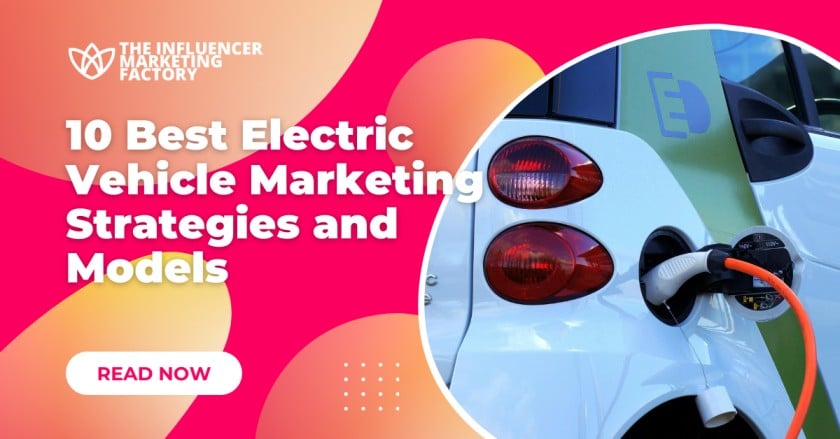
27 Feb 10 Best Electric Vehicle Marketing Strategies and Models
Summary
The global automotive landscape is navigating a paradigm shift, with traditional sales tactics giving way to sophisticated, data-driven electric vehicle marketing frameworks. As Gen Z and Millennials become the primary drivers of market demand, the industry is moving beyond “green idealism”—the vague promise of sustainability—toward pragmatic ROI, software-defined utility, and total cost of ownership (TCO). For modern brands, success in this space requires more than a superior battery; it demands a harmonisation of creative storytelling with empirical performance metrics, grounded in proven influencer marketing for automotive strategies.
In 2024, the “vanity metrics” of the past, such as simple brand awareness or impressions, are no longer sufficient to justify the high customer acquisition costs (CAC) associated with the EV sector. Instead, authoritative brands are leveraging scalable digital funnels that prioritize transparency and technical rigor. This transition toward software-defined vehicles (SDVs) means that marketing is no longer a one-time transaction but a continuous value loop fueled by over-the-air (OTA) updates and integrated ecosystems. To capture market share, manufacturers and agencies must bridge the gap between complex engineering and relatable consumer benefits, ensuring that every campaign is backed by traceable business outcomes and high-intent audience targeting.
1. Electric Mobility And Market Adoption Trends
This foundational resource serves as a strategic roadmap for brands navigating the complexities of the Energy And Transportation Markets. It provides empirical data on consumer adoption curves, infrastructure development, and the shift toward software-defined mobility. By analyzing global trends, it helps marketers move beyond vanity metrics to understand the tangible business outcomes of EV transitions. The report emphasizes the move from environmental messaging to practical value, focusing on total cost of ownership and utility for the early majority demographic.
- Key Features: Comprehensive adoption curve analysis, Infrastructure readiness KPIs, Regional market segmentation, Consumer sentiment tracking.
- Pros: High-level strategic validation, Data-backed market forecasting, Identifies high-intent consumer segments.
- Cons: Requires high data literacy for implementation, Focuses on macro trends over tactical creative execution.
- Best For: CMOs and VPs of Growth requiring macro-level market validation for long-term scaling.
2. Tesla Model 3
The Tesla Model 3 remains a dominant force in electric vehicle marketing due to its established brand loyalty and integrated ecosystem. Its marketing strategy relies heavily on organic-first visibility and a “tech-first” identity rather than traditional ad spend. The vehicle serves as a case study in software-defined vehicle (SDV) marketing, where over-the-air updates and autonomous features provide a continuous value loop for the consumer, effectively reducing churn and increasing lifetime value. By bypassing the traditional dealership model, Tesla maintains a direct-to-consumer (D2C) relationship that allows for granular data collection and hyper-personalized communication.
- Key Features: Extensive Supercharger network integration, Over-the-air (OTA) software updates, Minimalist interior design with central UI focus.
- Pros: High performance and range efficiency, Strong secondary market resale value, Unmatched charging infrastructure access.
- Cons: High upfront cost compared to entry-level ICE vehicles, Limited service center density in rural areas, Potential range anxiety in extreme cold climates.
- Best For: Tech-forward professionals and early adopters who prioritize a seamless software ecosystem.
3. Ford F-150 Lightning
The Ford F-150 Lightning represents a strategic pivot for legacy CPG-style automotive brands. Its marketing focuses on “familiar utility,” bridging the gap between traditional truck owners and the electric future. By emphasizing features like Pro Power Onboard, Ford markets the vehicle as a tool rather than just a sustainable alternative. This approach targets the “pragmatic majority” by solving real-world problems like job-site power and home backup during outages. The campaign strategy leverages the existing trust of the F-Series brand while introducing the efficiency of an electric powertrain, effectively mitigating the risk of alienating a conservative core demographic.
- Key Features: Pro Power Onboard (9.6 kW exportable power), Intelligent Backup Power for homes, Familiar F-Series design language.
- Pros: High utility for commercial and recreational use, Strong brand reputation and dealer network, Innovative storage solutions (Mega Power Frunk).
- Cons: Significant price premium over gas-powered F-150s, Long wait times for specific trim levels, Towing significantly impacts real-world range.
- Best For: Traditional truck buyers and commercial fleets looking for a low-friction transition to electric.
4. Hyundai Ioniq 5

The Hyundai Ioniq 5 leverages innovative design and ultra-fast charging as its primary marketing pillars. It targets the “design-conscious” demographic, using a retro-futuristic aesthetic to stand out in a saturated market. Its marketing strategy emphasizes the “time-saving” aspect of its 800V battery system, directly addressing the “charging anxiety” that often hinders EV adoption. This model demonstrates how challenger brands can gain market share through distinct visual identity and superior technical specs. By focusing on the “lifestyle of convenience,” Hyundai successfully positions the Ioniq 5 as a premium tech product rather than just a commuter vehicle.
- Key Features: 800V ultra-fast charging architecture, Vehicle-to-Load (V2L) capabilities, Retro-futuristic ‘Pixel’ design language.
- Pros: Industry-leading charging speeds (10% to 80% in 18 mins), Spacious, lounge-like interior, Highly competitive pricing in the mid-market segment.
- Cons: Lower brand recognition in the premium EV space, Limited availability in certain geographic regions, Dealer network variability in EV service expertise.
- Best For: Design-focused urban professionals who prioritize fast charging and unique aesthetics.
5. Rivian R1T

Rivian’s marketing strategy is built on “adventure-ready” authenticity. It targets the high-growth D2C segment by positioning the vehicle as a companion for the outdoors. Unlike legacy brands, Rivian uses high-quality UGC and lifestyle-driven content to build a community of enthusiasts. Their marketing funnel focuses on the “experience” of ownership, utilizing mobile service vans and a direct-to-consumer sales model to maintain control over the brand narrative and customer relationship. This strategy effectively bypasses the “corporate” feel of traditional automotive marketing, appealing directly to Gen Z and Millennial values of exploration and environmental stewardship without sacrificing performance.
- Key Features: Quad-Motor AWD system, Gear Tunnel storage compartment, Built-in air compressor and adventure accessories.
- Pros: Exceptional off-road performance, Unique, high-end brand positioning, Highly functional storage and utility features.
- Cons: Premium price point limits mass-market reach, Direct-to-consumer model faces legal hurdles in some states, Smaller service network compared to legacy OEMs.
- Best For: Outdoor enthusiasts and affluent early adopters seeking a premium, adventure-capable EV.
6. Chevrolet Bolt EV
The Chevrolet Bolt EV serves as the primary case study for “value-segment” electric vehicle marketing. Its strategy focuses on affordability and total cost of ownership (TCO), targeting budget-conscious commuters. By emphasizing the federal tax credit and low maintenance costs, Chevrolet positions the Bolt as the logical choice for the “pragmatic buyer.” The marketing avoids high-tech jargon in favor of relatable, everyday use cases that normalize EV ownership for the average consumer. This model proves that a data-driven approach to pricing and ROI can be just as effective as high-concept creative in driving conversions.
- Key Features: Compact footprint for urban maneuverability, One-Pedal Driving with Regen on Demand, Standard DC fast charging capability.
- Pros: One of the most affordable EVs on the market, Excellent visibility and ease of parking, Proven platform with high reliability scores.
- Cons: Slower DC fast charging compared to newer rivals, Smaller interior and cargo space, Perceived as a ‘budget’ option in a status-driven market.
- Best For: Budget-conscious commuters and first-time EV buyers looking for maximum ROI.
7. BMW i4

BMW’s marketing for the i4 focuses on “uncompromised performance.” It targets legacy luxury buyers who are hesitant to switch to electric for fear of losing the “driving feel.” The marketing narrative emphasizes that the i4 is a BMW first and an electric vehicle second. This strategy leverages the brand’s heritage in engineering to build trust, using high-production-value content that highlights acceleration, handling, and the premium interior experience. By positioning the i4 as a natural evolution of the 3-series, BMW reduces the friction of adoption for its loyal customer base, ensuring that the transition to electric feels like an upgrade rather than a compromise.
- Key Features: BMW Curved Display with iDrive 8.5, M-Sport tuned suspension options, IconicSounds Electric by Hans Zimmer.
- Pros: Superior driving dynamics and handling, High-quality interior materials and build, Familiar luxury experience without the ‘tech-experiment’ feel.
- Cons: Shared platform with ICE models limits some EV-specific benefits, Rear seat space is tighter than dedicated EV platforms, Options can quickly inflate the final price.
- Best For: Luxury car enthusiasts who want the performance of a sport sedan with an electric powertrain.
8. Kia EV6

The Kia EV6 uses a “future-forward” marketing strategy that emphasizes technology and speed. By winning multiple “Car of the Year” awards, Kia has used third-party validation to elevate its brand status. Their marketing campaigns often feature high-velocity visuals and focus on the GT trim’s acceleration, positioning the brand as a serious competitor to premium European EVs. This model is a key example of using “prestige marketing” to shift consumer perception of a value-oriented brand. The use of augmented reality (AR) features in their marketing materials signals a commitment to innovation that resonates with tech-savvy Gen Z and Millennial audiences.
- Key Features: Augmented Reality (AR) Head-Up Display, Ultra-fast DC charging (up to 350kW), Dual-curved panoramic screens.
- Pros: Striking, award-winning exterior design, Very fast charging capabilities, Strong warranty and reliability reputation.
- Cons: Limited rear visibility due to sloping roofline, Touch-sensitive controls can be distracting, Frunk space is minimal compared to competitors.
- Best For: Tech-savvy families and individuals looking for a high-performance, visually distinct EV.
9. Lucid Air
Lucid Air’s marketing is centered on “post-luxury” and “engineering excellence.” It targets the ultra-high-net-worth demographic by focusing on range and efficiency as the ultimate luxury metrics. Their strategy highlights the miniaturization of their powertrain components, allowing for more interior space—a concept they call “Space Efficiency.” Lucid uses a highly polished, minimalist aesthetic in its marketing to appeal to consumers who find Tesla too “mass-market” and legacy luxury too “old-world.” By emphasizing miles-per-kWh, Lucid positions itself as the intellectual choice for the affluent buyer who values technical purity over brand heritage.
- Key Features: Industry-leading range (up to 516 miles), Lucid DreamDrive Pro ADAS, Glass Canopy roof for an open cabin feel.
- Pros: Unmatched electric range in the production market, Exquisite interior craftsmanship, Extremely high efficiency (miles per kWh).
- Cons: Very high entry price, Newer brand with a limited service and support history, Software UI has faced early stability critiques.
- Best For: Affluent buyers who prioritize range, engineering purity, and exclusive luxury.
10. Polestar 2

Polestar 2 utilizes a “sustainability-first” marketing narrative, focusing on transparency and ethical sourcing. Their marketing includes “Life Cycle Assessments” that detail the carbon footprint of the vehicle from production to disposal. This appeals to the “conscious consumer” who demands more than just zero tailpipe emissions. The brand’s aesthetic is rooted in Scandinavian minimalism, targeting urban professionals who value understated design and a Google-integrated software experience. Polestar’s strategy demonstrates how radical transparency can be used as a competitive advantage in a market where “greenwashing” is a common consumer concern.
- Key Features: Google Built-in (Android Automotive OS), Sustainable interior materials (WeaveTech), Performance Pack with Brembo brakes and Öhlins dampers.
- Pros: Seamless integration with Google ecosystem, High safety ratings and build quality, Transparent sustainability reporting.
- Cons: Interior can feel cramped for larger passengers, Range is competitive but not class-leading, Ride quality can be firm on the Performance trim.
- Best For: Environmentally conscious tech professionals who value transparency and minimalist design.
The EV Marketing Funnel: From Anxiety to Conversion
Navigating the electric vehicle marketing funnel requires a strategic understanding of the unique psychological barriers inherent in the transition from internal combustion engines (ICE). Unlike traditional automotive sales, the EV journey is often longer and requires multiple touchpoints to address “Attribution Anxiety” and technical skepticism. To drive scalable growth, brands must segment their messaging across the three primary stages of the funnel.
Top of Funnel (TOFU): Mitigating Range Anxiety
At the awareness stage, the primary objective is education. Potential buyers are often paralyzed by “Range Anxiety”—the fear that an EV will leave them stranded. Effective marketing at this stage utilizes User-Generated Content (UGC) to normalize the charging experience. By partnering with influencers who can demonstrate the reality of daily charging and long-distance travel, brands can build trust more effectively than through polished corporate commercials. The goal here is to move the consumer from “Is this possible?” to “This fits my lifestyle.”
Middle of Funnel (MOFU): Proving Total Cost of Ownership (TCO)
Once the initial technical fears are addressed, the conversation must shift to value. This is where empirical data becomes the primary driver. Marketing materials should focus on TCO, comparing the long-term savings of electricity and reduced maintenance against the higher upfront purchase price. Interactive calculators, data-backed white papers, and performance-tracked case studies are essential tools here. For B2B or fleet buyers, this stage is critical for justifying the ROI to stakeholders and board members.
Bottom of Funnel (BOFU): Driving Conversion through Software Superiority
At the conversion stage, the differentiator is often the software ecosystem. As vehicles become “computers on wheels,” the user interface (UI) and over-the-air (OTA) capabilities become the closing arguments. Marketing should highlight the “living” nature of the product—how the car improves over time through software updates. To ensure high-velocity conversions, brands must implement robust tracking pixels and attribution tools to identify which creative assets are actually driving dealership visits or online reservations. In a multi-touch journey, proving the financial return of every marketing dollar is the only way to maintain a competitive margin.
About The Influencer Marketing Factory
The Influencer Marketing Factory is a global, full-service influencer marketing agency that plans and runs ROI-focused campaigns across platforms like TikTok, Instagram, and YouTube. Their team supports brands end to end—setting KPIs, defining target audiences, identifying creators whose demographics match the ideal customer profile, shaping the campaign narrative, managing execution, and delivering tracking and in-depth reporting. They also build performance-led social commerce programs, including TikTok Shop strategies that combine creators, affiliates, and paid media with a clear focus on measurable growth.
Want help turning creator marketing into a trackable growth channel?
Contact The Influencer Marketing Factory to discuss your goals and get a campaign plan built around ROI.
Conclusion
The future of the automotive industry is undeniably electric, but the winners will not be determined by battery chemistry alone. Success in 2024 and beyond requires a sophisticated approach to electric vehicle marketing that prioritizes data-driven storytelling over vague environmental promises. Brands must prove their utility, demonstrate software superiority, and provide a transparent roadmap for long-term value. By harmonizing the dynamism of the creator economy with the rigor of enterprise-grade analytics, manufacturers can bridge the gap between early adopters and the pragmatic majority. The transition to sustainable mobility is a complex challenge, but for those who leverage empirical insights and authentic engagement, it represents the single greatest growth opportunity in the history of transportation. Now is the time to move beyond vanity metrics and focus on the scalable, traceable outcomes that define the next generation of automotive excellence.
Frequently Asked Questions
What are the main barriers to EV adoption?
The primary barriers include range anxiety, the higher upfront cost compared to ICE vehicles, and concerns regarding the density of charging infrastructure. Marketing can mitigate these concerns through data-driven education, TCO calculations, and authentic UGC that demonstrates real-world reliability.
How can influencer marketing help in promoting EVs?
Influencers act as a bridge of trust, normalizing the EV lifestyle by demonstrating charging routines and long-distance travel in a relatable way. Authentic UGC is often more effective than corporate advertising at demystifying complex technology like Vehicle-to-Load (V2L) or autonomous driving features.
What is the role of software in EV marketing?
Software-Defined Vehicles (SDVs) allow brands to market their cars as “living” products. Over-the-air (OTA) updates provide ongoing value, effectively reducing depreciation and increasing the lifetime value (LTV) of the customer. Marketing the software ecosystem is now as critical as marketing the physical hardware.