
27 Mar Complete Guide To Building A Profitable Tiktok Shop Strategy
Summary
Discovery-based shopping is the new law of the land. For example, a person opens TikTok to watch a funny video or learn a new recipe, and suddenly, they see a creator they trust wearing a pair of shoes that look incredible. They click a small yellow basket, and three taps later, those shoes are on their way to their house.
This is TikTok Shop. It is one of the most powerful sales tools created in the last decade. However, no powerful tool can be wielded easily because of its inherent complexities. At The Influencer Marketing Factory, we have developed a 10-step TikTok shop setup playbook to help brands move from zero sales to a viral revenue engine.
Launch Your TikTok Shop Strategy Today!
Why TikTok Shop Is Different
The best way to understand what makes TikTok Shop different is by comparing it head-on with the dated methods of the market:
Traditional eCommerce vs TikTok commerce
Brands fail because they treat TikTok like their traditional e-commerce website. Uploading a massive catalog with boring, white-background corporate listings guarantees zero traction. On TikTok, entertainment precedes the sale.
The 3 Pillars of TikTok Shop Success:
- Content Velocity: A steady stream of new videos every week to feed the algorithm.
- Creator Ecosystem: A massive network of affiliates creating content on your behalf.
- Conversion-Ready Pages: Product Detail Pages (PDPs) optimized to trigger instant impulse buys.
Planning your next TikTok Shop strategy? Use our interactive TikTok Shop checklist tool to make sure you don’t miss a single step.
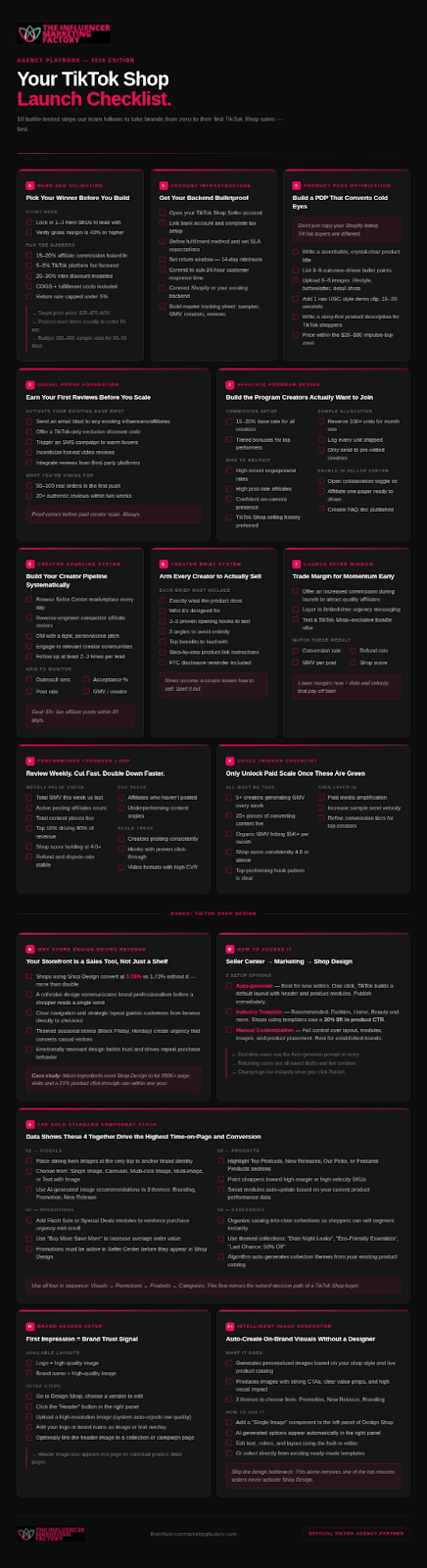
Planning your next TikTok Shop strategy? Use our interactive TikTok Shop checklist tool to make sure you don’t miss a single step.
TikTok Shop Setup: Step-by-Step Breakdown
Without beating around the bush, this is the very same system we use to help our clients raise their brand’s TikTok revenue, from 0 to rising above and beyond.
1. Hero SKU Validation
Goal: Avoid scaling the wrong product here
You’re going to need to select 1-3 “hero” or main items that essentially will become the leads of your brand. Ideally, these will be products that can showcase their worth on camera, under 15 seconds, with bonus points for being something interesting to look at through the lens.
For example, a cleaning product showing how well it cleans up a mess or how a beauty product enhances the look of an individual in an obvious way.
Demand Validation Checklist
- Existing Traction: If an item is already doing well across other platforms, it has a higher chance of working on TikTok as well. Though, yes, keep in mind if it can indeed be showcased in 30 seconds or less. You don’t want your first product to be something brand new and untested.
- Margin Structure: Factor in platform fees, shipping costs and a generous cut for the people promoting the item. Numbers need to be run carefully here, and ideally, gross margin should be 40 percent or higher.
- UGC Potential: Nothing sells a product better than regular people, so user-generated content must be respected. They are the lifeblood of your sales here. So, normal people should be able to film themselves using your item, and this will require you to accommodate sending some free samples in the beginning.
- The Price Point Sweet Spot: Aim for a price between $25 and $70.
- If the price is under $20, your profit margins will be eaten up by shipping and TikTok fees.
- If the price is over $80, people will stop to “think about it.” On TikTok, you want them to buy on impulse.
Don’t build a store. Build around a winning SKU.
2. Account Infrastructure
Goal: Remove operational friction early
This is what would be called the backend. TikTok is a serious marketplace, so our goal here is to remove all operational frictions from the get-go.
- TikTok Shop Seller Center setup: This is the dashboard where your entire business lives. You need to open your account and fill out every single detail perfectly. This includes linking your actual business bank account so your money can be deposited smoothly.
- Tax + Compliance: The rules here are very strict. You must complete your tax setup and verify your business identity before you can sell anything.
- Shipping SLAs (Fast Delivery = Conversion): Set clear expectations about deliveries from the get-go. Buyers want items immediately. Faster deliveries are always a green flag and lead to better reviews and more conversions. You should aim to process and ship every single order in under 24 hours. You also need to set a clear return window of at least 14 days.
- Customer support readiness: Nobody likes being ignored, and this is a social media platform before a full-fledged marketplace. Shoppers will send you messages, and you must commit to responding to them within 24 hours.
- Tracking systems (GMV, Creators, Content): You need to connect your Shopify store or your existing backend system, so your inventory stays accurate. You also need to build a master tracking sheet that will log every free sample you mail out, your total sales volume, the creators you are talking to, and your daily reviews. Keep the numbers intact for a tally, basically.
3. Product Page Optimization
Goal: Turn traffic into buyers
When a user clicks that yellow basket in a video, they land on your Product Detail Page (PDP). This is where the sale is made or lost.
You don’t want this to seem corporate, so keep that kind of jargon to a minimum. Use words people search for in everyday life. So, if you’re selling a camera, don’t go for “XYZ Z8990”, go for something more realistic like “Mirrorless Camera”. Majority buyers first need to know if the product can do what they expect out of it. For example:
- Bad: “Designed for optimal performance.”
- Good: “Works fast so you don’t miss a moment.”
Add a visual stack containing 6-8 high-quality images, ideally lifestyle photos and before/afters, along with a 15-30 second video of a real person using the product. It shouldn’t look like a fancy commercial, but more like a friend showing you something they love.
Now, price your item within that impulse-buy-zone price range so people can click that buy button without overthinking the purchase. If there is a discount, show it clearly on the page.
4. Social Proof Foundation
Goal: Build trust before volume
Without trust, there are no sales. That is true for traditional markets, and it stands true here as well. You need to build your social standing online before expecting the volume of sales to grow.
- Early reviews matter the most, so you need to earn those before pushing your item further. If you have an active fanbase already, send an email to them and let them show their love.
- For newer customers, incentivize the UGC trigger. Offer them exclusive discounts and a special deal if they buy the item and post an honest video review.
- If needed, import existing reviews from third-party platforms. Do, however, note this is not always permissible. If it is, this helps your page look busy and trusted from day one.
- Here is a realistic goal: 50-100 real reviews and 20 or more authentic reviews within the first two weeks. A library of real videos from real buyers makes the algorithm trust your shop.
5. Affiliate Program Design
Goal: Make creators WANT to promote
Creators are what make or break this platform. So, you want them to WANT to promote your product. Simple ways of doing it include:
- Competitive Commission Rates: Offer a 15-20% commission for all creators who want to work with you. In high-competition categories like beauty, this may even reach 30%. Pay less, and good creators will work with your competition.
- Tiered Incentives: Similar to real-world sales, incentives should be given for top performance. If a creator sells 50 units for you, give them an extra cash bonus or bump their rate up. This keeps them motivated to keep talking about your brand week after week.
- Frictionless Collaboration: Make the process as easy as you can for the creators. Do not charge for shipping, hand out free products, provide a clear FAQ page, and have a dedicated affiliate page ready to share.
As for creator selection criteria, keep in mind the following:
- Engagement Over Followers: Engagement is always better than follower count. A micro-creator with a dedicated audience often converts better than a macro-influencer with low interaction.
- On-Camera Presence: Camera confidence and way of speaking do matter. You want a creator to invoke a positive feeling when they speak about your product.
- Proven Track Record: Look for people who already have a history of selling things on the app. Familiarity with the TikTok Shop ecosystem makes the entire process smoother.
6. Creator Sourcing System
Goal: Consistent creator inflow
Consistent creator inflow is what we’ll be aiming for here. You need to build your creator pipeline systematically. Browse the Seller Center marketplace every single day to find new people who fit your brand vibe and select them. Here’s how to go about it:
- Reverse Engineer: Find which creators are making videos for your direct competition and add them to your outreach list.
- Outreach Template: Send a direct message with a tight but personalized pitch. Tell them exactly why you love their videos. Don’t be disheartened if they don’t respond immediately. Follow up at least 2-3 times before shifting focus.
- Community Sourcing (Niche Creators): You must engage with the community to understand what truly works for your audience. You may find a hidden gem this way, someone who has a highly dedicated audience that’s perfect for your product.
KPIs to monitor here will be:
- Outreach Sent: Keep track of how many messages your team sends daily.
- Acceptance Rate: Track how many people actually say yes to receiving a sample.
- Content Output Per Creator: Track how many videos you get from the samples you mailed. Your goal is 50 or more live posts within 30 days.
7. Creator Brief System
Goal: Standardize winning content
If you’ve got a content system that works, make it the standard. Creators are all different, so you need to share with them a brief that has worked before and is the standard practice for your product’s content. Here’s what every brief must include:
- Product Use Case: Spell out exactly what the product does and who it is designed for. Leave absolutely no room for guessing or confusion.
- Hook Ideas: A hook is the very first sentence a creator says that stops a viewer from scrolling past their video. A hook can be words or visuals, and is arguably the most important part of a video. Provide three to five proven opening hooks for them to test out.
- Key Benefits: List the top benefits they need to lead with in their video so they do not get distracted talking about things that do not actually sell the item.
- Proven Hooks Framework: Never assume a creator knows how to sell your specific item automatically. Give them the exact words that you know work from your past sales data on your other websites.
- CTA Structure (Soft vs Direct): Include step-by-step instructions on how to point to the product link on the screen. Tell them to give a direct command to the viewer to click and buy right now instead of just hoping the viewer figures it out on their own.
- Compliance (FTC Disclosure): You want to stay on the “right side of the law,” so ask your creators to disclose that this is a paid partnership so your brand does not get into trouble.
8. Launch Offer Window
Goal: Trigger initial velocity
It is often the hardest part to get the ball rolling, but once it is, it is smooth sailing afterwards. Trigger initial velocity by offering:
Time-bound Incentives:
- Discounts: Trade your profit margins in the early phases to get momentum on your side. Limited-time urgency messaging makes buyers act fast, and decent discounts will result in an instant buy.
- Bundles: Test an exclusive bundle offer that buyers can only get on this specific app. This makes the offer feel very special, and exclusivity goes a long way.
- Creator Activation Push: Get all your sourced creators to post their videos within the same narrow window of time. This creates a wave or trend online that works in your favor.
- Testing Multiple Offers: Try different types of deals to see what your specific audience responds to best. Lower margins now give you the data and the velocity that pay off in a huge way later down the line.
Early-stage KPIs:
- Conversion Rate: Watch closely how many page visitors actually click the buy button. Aim for a conversion rate of 2% or higher to signal to the algorithm that your product is a winner.
- GMV Per Post: Track the total revenue generated from each individual video to identify which creators and content styles are driving the most value.
9. Performance Feedback Loop
Goal: Double down on winners
Do a weekly check on your top creators and content formats. Look at the count of active posting affiliates and the total pieces of live content they made, along with the top ten percent of videos that are driving eighty percent of your revenue. Make sure your shop score is holding steady at 4.0 or above so you do not get penalized by the system.
Scale up what works and kill the underperformers quickly. Any affiliates who took a free sample but never posted, for example. Also, avoid using hooks that don’t work. Waste no time on what does not work and double down on things that do.
Give bigger bonuses to the creators posting consistently and driving real sales for your brand. Treat them like your best employees because they are.
10. Scale Trigger Checklist
Goal: Know when to scale
Here are the signals that you’re on the right track:
- Consistent Creator Output: You need five or more creators generating revenue every single week without you having to remind them to post.
- High-performing SKUs: Your top item needs to have a clear and proven hook pattern that works every single time.
- Stable Conversion Rate: Your organic sales should be hitting a stable number per month consistently without spending any money on advertising.
- Positive Unit Economics: Your shop score must be consistently at 4.5 or above to ensure healthy operations and keep customer complaints low.
Once you feel confident that it is time to scale, scale via:
- Paid Amplification: Only unlock the paid scale once all those signals are green. Then you can layer in paid media money to boost the specific videos that are already winning organically.
- More Creators: Increase how fast you send out samples to new people now that you know exactly what kind of videos make money.
- More SKUs (Carefully): Start introducing your second and third best items to the audience now that they trust your brand and have had a good experience buying from you the first time.
Launch Your TikTok Shop Strategy Today!
TikTok Shop Store Design
1. Your Storefront is a Sales Tool
A beautiful storefront builds trust the second a shopper clicks your profile. A clear layout guides customers directly to checkout smoothly. Themed holiday stores create urgency that converts visitors into buyers.
2. High-Converting Store Components
Lead with strong visuals to anchor your brand. Keep the design clean and cohesive to signal professionalism. Highlight top products and guide shoppers to your best items.
Update regularly with new releases. Add mid-scroll deals to create urgency. Use bundles to boost order value. Organize products into clear collections for easy browsing.
3. Brand Setup and Image System
First impressions matter a lot, so upload high-resolution images. Connect your header image to a specific campaign to drive traffic directly to a sale.
4. AI Image Generator
Use AI tools to auto-create visuals based on your live catalog for free. No creativity lags, no need to hire a full-time designer. High-quality images with a strong CTA are merely a click away.
Why Work With The Influencer Marketing Factory
The Influencer Marketing Factory prepares your TikTok shop from ground zero to making it a sales machine. We handle everything from strategy and creator selection to content and performance tracking with a clear focus on revenue.
You get a structured launch plan, creators who convert, and content designed to drive sales instead of just views. Plus, our TikTok shop agency provides full visibility into what’s working, so you can scale with confidence.
Skip the trial and error. Launch faster, spend smarter, and grow with a strategy backed by real data. With the right systems in place, TikTok becomes a consistent and scalable revenue channel.
Launch Your TikTok Shop Strategy Today!
FAQs
Do I need a massive following to start my TikTok Shop?
No. The creators you hire will bring the audience to you. Your brand account just needs to look professional.
How many products should I list on my TikTok Shop?
Start with one to three hero items. A massive catalog confuses buyers.
What happens if an item goes out of stock?
It hurts your shop score. Keep your inventory tracking connected perfectly so items pause automatically when empty.
How long does it take to see results from TikTok Shop?
If executed correctly, initial traction can start within 2-4 weeks. However, consistent creator content and testing are key to building sustainable revenue over time.
Can I run ads on TikTok Shop, or is it purely organic?
You can run ads, but they should only be layered on top of content that’s already performing organically. Scale what works instead of guessing.
What kind of products perform best on TikTok Shop?
Products that show clear, quick results on camera perform best. Think visually engaging, easy-to-understand items that solve a problem within seconds.